
Friends, if you are stressed about loans and credit card bills, you are not alone. I remember a time when I looked at my own bills and felt a small knot in my stomach. That feeling is real, and it is okay to admit it. Today we will talk about how to pay off debt faster, using simple steps that actually work in real life, not just in theory.
You don’t need a finance degree to fix your money problems. You just need a clear plan and the will to stick with it. So let’s talk about how you and I can build that plan together, step by step.
Highlight key
- Learn how to pay off debt faster with 10 simple, real-life strategies.
- Understand the debt snowball vs debt avalanche method.
- Tips to pay off debt even on a low income
- How to save money while paying off your debt
- Honest advice on what works and what does not
Why It Is Hard to Pay Off Debt Faster
Tell me the truth: have you ever paid the minimum amount on your credit card and felt relief, only to see the balance barely move next month? That is because minimum payments mostly cover interest, not your actual debt.
This is one big reason people struggle to figure out how to pay off debt faster. The interest keeps piling up quietly in the background. In my experience, once you understand how interest works against you, you start making smarter choices with your money.
Debt does not mean you have failed in life. Unexpected things like medical expenses or losing a job can happen to anyone. So, do not blame yourself. Instead of feeling guilty, focus on taking the right steps to improve your situation.
Another reason debt feels so heavy is that many of us never learned how to plan a proper debt repayment plan in school. We just learn as we go, often by making mistakes along the way. Therefore, do not feel bad if you are starting late. What matters most is starting at all, and starting today.
1. Know Exactly What You Owe
Before you can create a solid debt repayment plan, you need full clarity. Sit down, open every statement, and write down each debt, the interest rate, and the minimum payment.
This step feels boring, but it is honestly one of the most powerful things you can do. Most people avoid this step because it can feel a little scary. However, once the numbers are on paper, the fear usually gets smaller than the imagination.
If you think as I do, spreadsheets can feel like a chore. But even a simple notebook list works fine. The point is to see the full picture clearly.
While making this list, also note the due date for each payment. Missing a due date can add extra fees and hurt your credit score, which makes the whole journey slower. A simple reminder on your phone can save you from this small but costly mistake.
2. Choose Between Debt Snowball and Debt Avalanche
This is one of the most searched questions, debt snowball vs debt avalanche method, and both are good ways to pay off debt quickly.
- Debt Snowball: Pay off your smallest debt first, while paying minimums on others. Once it’s finished, move on to the next smallest one.
- Debt Avalanche: Pay off the debt with the highest interest rate first, saving more money over time.
The snowball method gives you quick wins, which keeps you motivated. The avalanche method saves more money in interest. Honestly, either one works if you stick with it. Choose the one that matches your personality best.
If you are someone who needs fast motivation to keep going, snowball may suit you better. But if you are patient and want to save the most money possible, avalanche is the smarter path. There is no wrong choice here, only the choice that keeps you consistent month after month.
3. Build a Simple Budget That You Can Actually Follow
A budget is not about punishing yourself. It means understanding where your money is being spent. This is one of the most practical tips to pay off debt because most people lose money simply due to not tracking small expenses.
Try the simple rule of splitting your income into needs, wants, and debt payments. Even a rough plan is better than no plan at all. Now let’s talk about something that surprises many people, extra income does not need to be huge to make a difference.
I once tracked my own spending for just one month using a simple notes app, and I was shocked at how much went into small food orders. Fixing that one habit alone freed up enough money to make an extra debt payment every month. Sometimes, the solution can be much simpler than we think.
4. Cut Small Expenses That Add Up
Friends, small leaks sink big ships. Extra subscriptions, unused memberships, and daily small spends silently drain your wallet. These are simple ways to become debt-free without feeling like you are giving up everything you enjoy.
You don’t have to give up all the things you enjoy. Just trim the extra fat. Redirect that saved money straight toward your debt.
Try this simple test. Go through your bank statement for the last two months and highlight anything you completely forgot you were paying for. Most people find at least one or two things they no longer need. Cancel those expenses and use the money you save to pay off your debt faster.
5. Increase Your Income Where Possible
If cutting expenses is not enough, earning a bit extra can speed things up. This matters a lot for people looking at how to pay off debt faster on a low income, since there is only so much you can cut from a tight budget.
Freelancing, part-time work, selling unused items, or asking for a raise are all valid options. Even small extra income, when sent directly to debt, creates real momentum over time.
The key word here is directly. It is very easy to earn a little extra and let it quietly disappear into daily spending. Instead, decide in advance that every rupee of extra income goes straight to your debt payoff plan, before you even see it in your regular account.
6. Use Windfalls Wisely
Tax refunds, bonuses, or gifts often feel like free money to spend. However, using this money toward debt is one of the fastest debt payoff methods available.
I remember once getting a small bonus and, instead of spending it on shopping, I put it directly on my loan. That single decision saved me months of extra payments later. Small wins like this build real confidence.
7. Avoid Taking On New Debt
This sounds obvious, but it is one of the hardest habits to break. If you truly want to know how to pay off debt without taking another loan, you must pause new borrowing while repaying old debt.
Every new debt resets your progress a little. Therefore, before swiping that card again, ask yourself if it is a need or simply a temporary comfort.
A simple trick that helped me was waiting twenty-four hours before any non-urgent purchase. Most of the time, the urge to buy fades away completely. This small pause can protect your debt-free strategies from silently falling apart.
8. Negotiate Lower Interest Rates
Many people do not know that you can call your bank or lender and simply ask for a lower interest rate. It may not always work, but there’s no harm in giving it a try.
Lower interest means more of your payment actually reduces your balance instead of feeding the interest. This is a smart, often overlooked way to reduce debt faster without extra income.
Be polite but firm when asking. Mention if you have been a loyal customer or if you have received better offers elsewhere. Lenders often prefer to keep a paying customer happy rather than risk losing your business entirely, so this conversation is worth having.
9. Prioritize Debt Payments Wisely
Knowing how to prioritize debt payments matters more than most people realize. If you want to save more money, it’s usually best to pay off high-interest debt, such as most credit cards, first.
However, if a smaller debt is causing you daily stress, paying it off first for peace of mind is also completely valid. There is no one-size-fits-all answer here.
Think about your own money personality honestly. Some people need the mental relief of clearing a debt completely, while others are comfortable playing the long game for bigger savings. Choose the approach that lets you sleep peacefully at night.
10. Track Progress and Celebrate Small Wins
Debt repayment is a marathon, not a sprint. Tracking your progress monthly keeps you motivated and honest with yourself. Whenever you clear one debt fully, celebrate it, even in a small way.
This is one of the best debt-free strategies because motivation fades if there is no visible progress. Seeing that number go down, even slowly, keeps you going.
You can use a simple chart, a jar of coins, or even a sticky note on your fridge to track how much debt remains. Visual progress makes the journey feel real, and it reminds you why you are working so hard every single month.
How to Pay Off Debt Faster in 12 Months
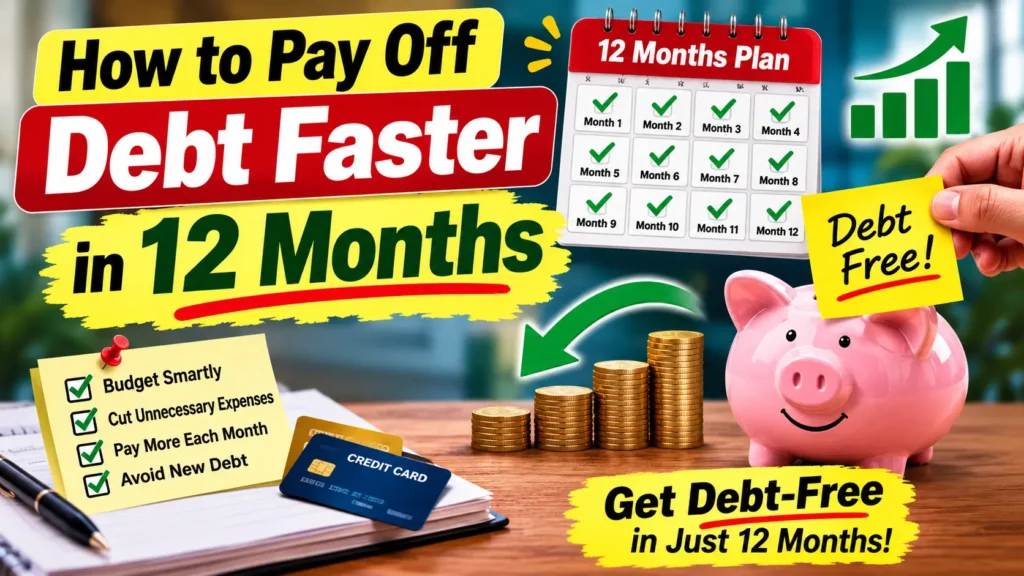
If your goal is to become debt-free in 12 months, combine several strategies above at once. Cut expenses, increase income, use windfalls, and follow either the snowball or avalanche method consistently.
It is not always easy, and some months will be tighter than others. But friends, consistency beats perfection every single time.
How to Pay Off Debt When You Have No Extra Money
This is a tough situation, and honestly, there is no magic trick here. Focus first on your budget, remove even the tiniest unnecessary expense, and consider temporary side income. Small consistent steps still count, even if progress feels slow at first.
Simple Ways to Save Money and Pay Off Debt Together
Friends, one thing many people forget is that you can save money and pay off debt at the same time. You do not have to choose only one. Small automatic transfers into a separate savings account, even a tiny amount, build a safety net while your main focus stays on clearing debt.
Final Thoughts
Friends, paying off debt faster is not about finding one perfect solution. It comes from making small, smart choices and sticking with them regularly. Some months may feel slow, and that’s completely normal.
In my experience, the biggest shift happens once you stop avoiding your numbers and start facing them directly. You already took a step today by reading this article, and that counts for something.
Disclaimer
This article is for general information only and should not be taken as professional financial advice. Please consult a certified financial advisor before making major money decisions.
FAQ's
What is the fastest way to pay off debt?
The fastest way is usually the debt avalanche method, paying high-interest debts first while making minimum payments on others, which saves more money overall.
Is debt snowball or avalanche better?
Snowball gives quick motivation by clearing small debts first, while avalanche saves more money long term. Choose based on what keeps you consistent.
Can I pay off debt with a low income?
Yes, focus on budgeting, cutting small expenses, and adding small side income. Slow progress is still real progress toward becoming debt-free.
Should I save money or pay off debt first?
Build a small emergency fund first, then focus heavily on debt. This avoids new debt if unexpected expenses suddenly appear.
How long does it take to become debt free?
It depends on your income, debt amount, and interest rates, but consistent effort can help many people become debt-free within one to three years.
Does paying off debt improve credit score?
Yes, reducing debt generally improves your credit utilization ratio over time, which often leads to a healthier overall credit score.