
Have you ever read a headline like, “Company XYZ’s share price jumped 40% on its listing day” and wondered how that happened? This is where an IPO comes into the picture.
If you are new to the stock market, you may be wondering, What Is an IPO and how does it actually work? The term may sound confusing at first, but there is nothing to worry about. In this article, I’ll explain everything about an IPO in very simple words, just like we are sitting together with a cup of chai and having a normal conversation.
I still remember when I applied for my first IPO. Honestly, I didn’t know much about the process. I had seen a friend make a profit from an IPO and thought, why not give it a try? That simple curiosity encouraged me to learn how IPOs work, and now I want to share that knowledge with you in an easy and beginner-friendly way.
Highlight key
- IPO means Initial Public Offering, when a private company sells shares to the public for the first time.
- Companies use IPO money to grow, pay off debt, or expand business.
- You can apply for an IPO through your bank or broker app using UPI.
- IPO shares can be profitable, but they also carry real risk.
- Allotment is not guaranteed; it depends on demand and luck too.
What Is an IPO? The Simple Meaning
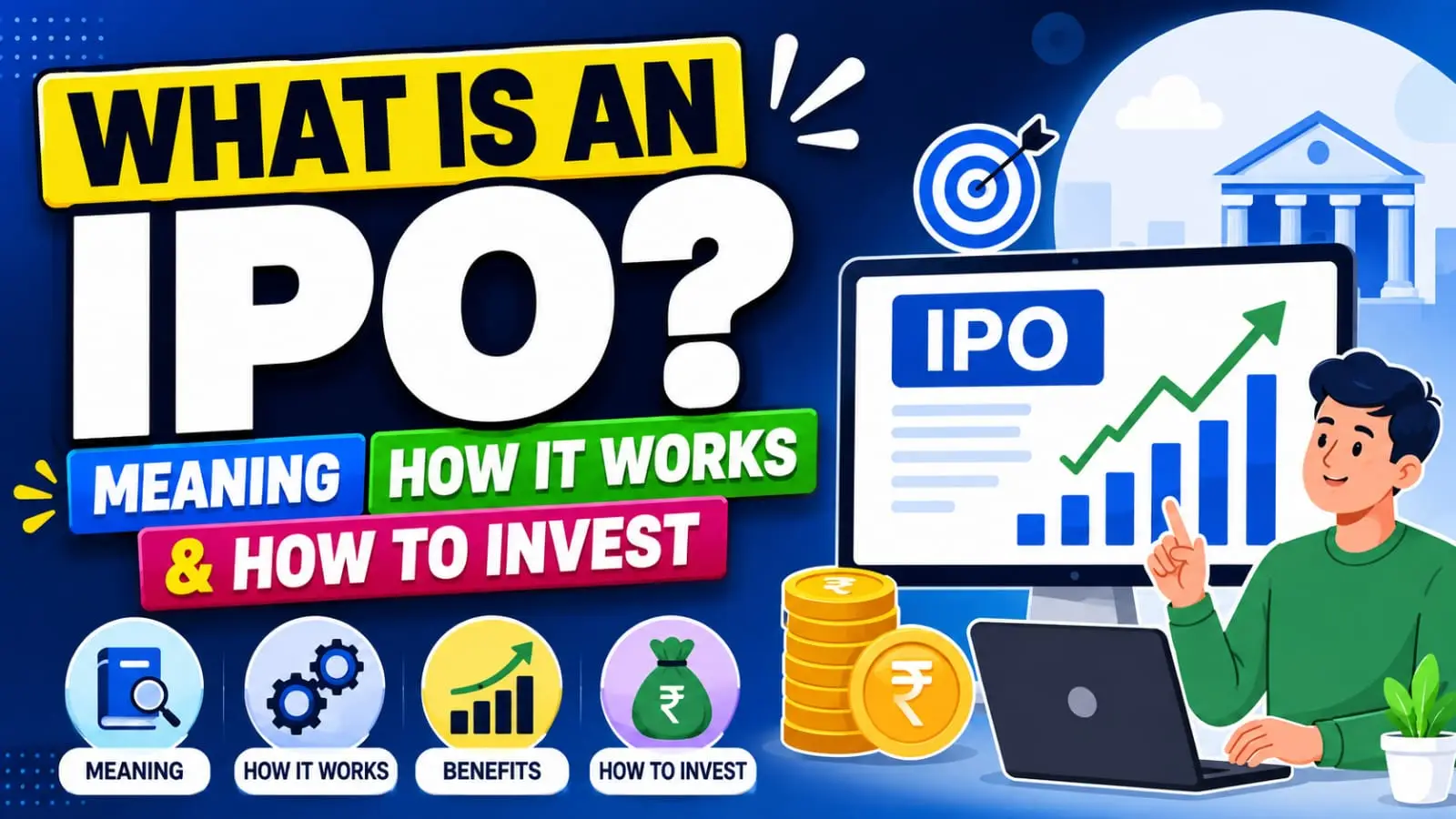
So, let’s talk about the main question first: what is an IPO? In very simple words, an IPO is the process where a private company opens its doors to the general public and sells a part of itself in the form of shares. Before this, only a few people like founders, family, and big investors owned the company. After the IPO, normal people like you and me can also become part owners by buying shares.
Think of it like this. Imagine your friend owns a small chai shop and it is doing really well. Now he wants to open ten more shops across the city, but he does not have enough money. So he tells his friends and neighbors, “Give me some money, and in return, you will own a small part of my chai business.” That is exactly what happens in an IPO, just on a much higher and more official level.
This is why people also ask IPO full form, and the answer is Initial Public Offering. Once this offering is complete, the company becomes a “public company” and its shares start trading on the stock exchange, like NSE or BSE in India.
IPO Meaning in the Stock Market for Beginners
If you are searching for IPO meaning in a more beginner-friendly way, here it is. Before an IPO, a company is private. Its shares are not available to buy on any exchange. Only insiders and select investors hold shares.
When the company decides to go public, it works with investment banks to decide the price, the number of shares, and the total money it wants to raise. This whole process is called an Initial Public Offering, or IPO.
Once it is listed, anyone with a demat account can buy or sell its shares just like any other stock. This is the real IPO meaning that every beginner should know before jumping into investing.
How Does an IPO Work? Step-by-Step Process
Now let’s talk about how an IPO works, because this is where most people get confused. Here is the honest, no-nonsense breakdown of the IPO process.
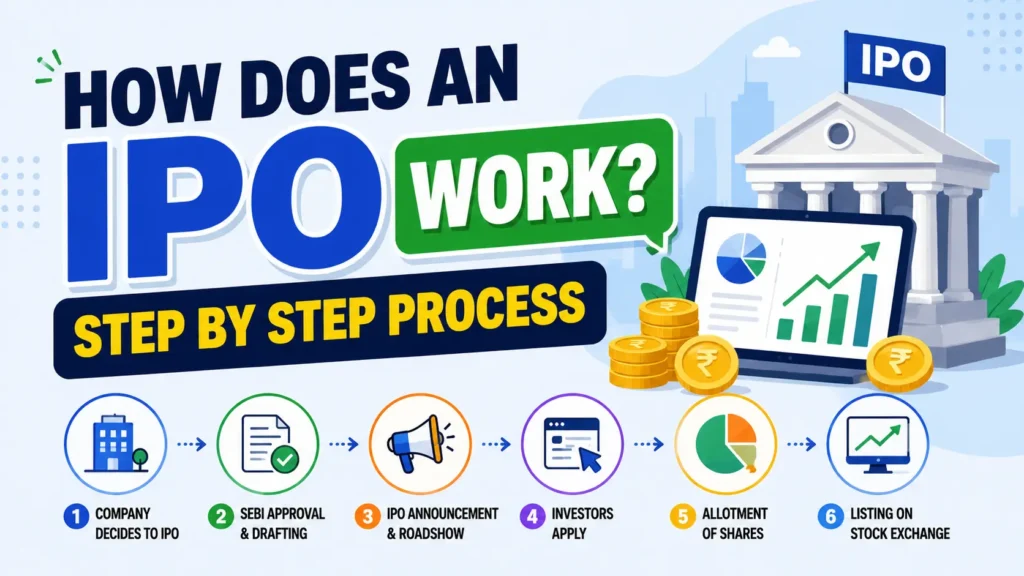
Step 1: Choose Investment Banks
First, the company selects investment banks, also known as underwriters. They help the company decide how much money it wants to raise and set a suitable share price.
Step 2: Submit Documents to SEBI
In India, the company has to submit a detailed document called the DRHP (Draft Red Herring Prospectus) to SEBI. It contains important information about the company, its financial condition, business plans, and possible risks. It may look like a long and boring document, but it is very important for investors.
Step 3: Meet Investors Through Roadshows
Next, the company meets large investors through roadshows. During these meetings, company officials explain their business, future plans, and why investors may find the IPO attractive.
Step 4: Announce the Price Band
The company then announces a price band, which shows the minimum and maximum price at which investors can bid. For example, the price band could be ₹100 to ₹110 per share.
Step 5: IPO Opens for Public Investors
Once the IPO opens, retail investors can submit their applications and place bids for the shares. In most cases, the IPO remains open for around 3 to 5 days.
Step 6: Share Allotment and Stock Listing
After the IPO closes, the company finalizes the share allotment. Investors who receive shares get them credited to their demat accounts. Finally, the shares are listed on the stock exchange, where they can be bought and sold.
So, Is the IPO Process Really This Long?
Yes, there are several steps involved. But each step is necessary to make the IPO process more transparent and organized. That is why a company usually spends months preparing before its IPO becomes available to the public.
IPO Process for Investing: How to Apply for an IPO in India
Friends, if you want to know how to apply for an IPO in India, this part is actually quite easy nowadays. You do not need to visit any office or fill out paper forms.
- Open your broker app like Zerodha, Groww, or your bank’s net banking.
- Go to the IPO section and select the company you want to apply for.
- Enter the number of shares (called lots) and your UPI ID.
- Approve the payment request (called mandate) in your UPI app.
- Wait for the allotment result, usually within a few days.
That’s it. In my experience, the whole process takes less than five minutes if you already have a demat account ready.
What Is IPO Allotment and How Does It Work?
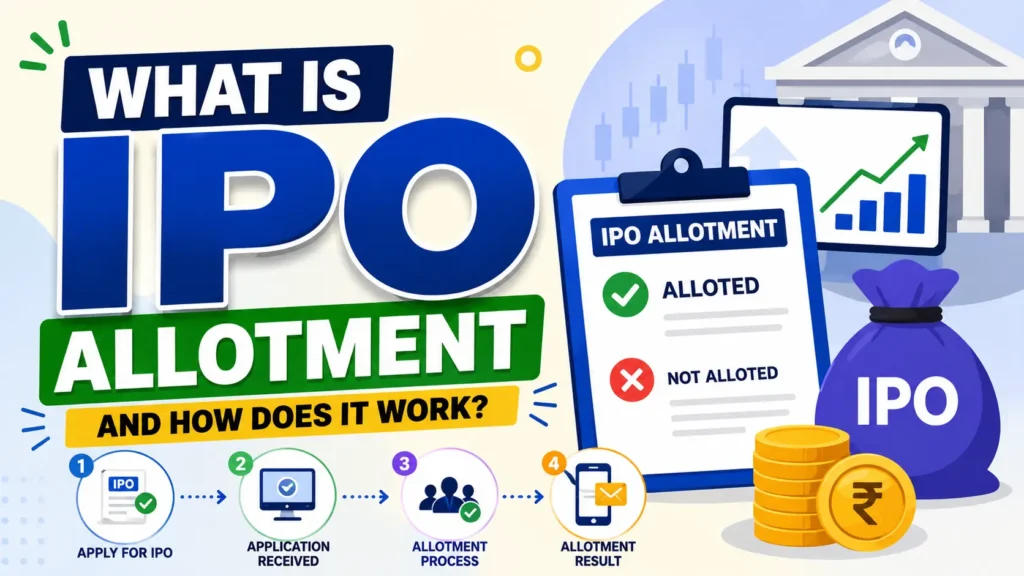
Now let’s talk about something that confuses a lot of beginners: IPO allotment. Just because you applied does not mean you will get the shares. If an IPO is very popular, there will be more applications than available shares.
In this case, a lottery system decides who gets the allotment. So even if your friend gets shares and you don’t, it does not mean you did anything wrong. This is simply how the system works when demand goes up.
How Is IPO Price Decided?
Many people ask how is IPO price decided, and honestly, this depends on a few factors. The company and its bankers look at the company’s earnings, growth story, industry comparison, and investor demand. Based on all this, they set a price band.
Sometimes, if there is a “book building” process, the final price is decided based on how much demand comes from investors during the bidding days. So the IPO price is not just a random number; it comes from real financial homework.
IPO Shares vs Regular Shares: What Is the Difference?
You may wonder, what is the difference between IPO and shares? Well, IPO is the event where shares are first sold. Once the company is listed, those same shares become regular shares that trade daily on the stock exchange.
So in short, an IPO is like the “grand opening,” and after that, normal buying and selling continues just like any other listed stock.
Benefits of Investing in an IPO
Let’s talk about the good side now: the real benefits of investing in an IPO.
- You can become an early investor in a growing company.
- Some IPOs list at a good premium, giving quick profit.
- It gives you a chance to own a piece of well-known brands.
- The process is now fully online and simple.
If you think like I do, getting into a good company early feels exciting, almost like discovering a new restaurant before it becomes famous.
Risks of Investing in an IPO
Now friends, here comes the honest part, because I promised you no hype. The risks of investing in an IPO are real, and you must know them.
- Not every IPO gives profit; some even list below their issue price.
- New companies do not have a long track record to judge.
- Hype and marketing can sometimes push prices higher than they deserve.
- Allotment is not guaranteed, so your money can get stuck temporarily.
I have personally seen IPOs that everyone was talking about, and later the stock fell badly after listing. So please, never invest just because of hype or social media noise.
Is Investing in an IPO Good for Beginners?
This is a common long-tail question: is investing in an IPO good for beginners? My honest answer is, it can be, but only if you do it carefully. Do not put all your savings into one IPO. Read the company’s business model, check its financial health, and only invest money you can afford to hold for the long term.
Is Investing in an IPO Good for Beginners?
This is a common long-tail question: is investing in an IPO good for beginners? My honest answer is, it can be, but only if you do it carefully. Do not put all your savings into one IPO. Read the company’s business model, check its financial health, and only invest money you can afford to hold for the long term.
What Should Beginners Know Before Investing in an IPO?
Before you jump in, here is what beginners should know before investing in an IPO:
- Always read the prospectus, at least the summary part.
- Do not follow blind hype from friends or social media.
- Diversify; do not put everything in one company.
- Understand that short-term listing gains are not guaranteed.
- Have a long-term view if you believe in the business.
Final Thoughts
So, friends, now you clearly understand what is an IPO, how the IPO process works, and how you can apply for one. It is not some magic shortcut to become rich overnight. It is simply a way for companies to raise money and for you to become a part-owner if you choose wisely.
In my experience, patience and research always work better than excitement and hype. So next time you see an IPO trending, take a breath, do your homework, and then decide.
Disclaimer
This article is for educational and informational purposes only. It is not financial or investment advice. IPO investments are subject to market risks, and past performance or listing gains of any company do not guarantee future results. Please read the official prospectus (RHP/DRHP) carefully and consult a certified financial advisor before making any investment decision. The author and publisher are not responsible for any loss arising from decisions made based on this content.
FAQ's
What is an IPO in simple words?
An IPO is when a private company sells its shares to the public for the very first time, letting normal investors buy ownership through the stock exchange.
What is the full form of IPO?
IPO full form of IPO is Initial Public Offering, meaning a company is offering its shares to the public for the first time ever.
How can I apply for an IPO in India? Y
ou can apply through your broker app or net banking, select the IPO, enter your UPI ID, and approve the payment mandate.
Is IPO allotment guaranteed after applying?
No, allotment is not guaranteed. If demand is higher than available shares, a lottery system decides who receives the allotment.
Are IPOs good for beginners to invest in?
IPOs can be good if you research properly, avoid blind hype, and only invest money you are comfortable holding long term.
What happens after an IPO gets listed?
After listing, the shares start trading normally on the stock exchange, and their price moves based on daily market demand and supply.