

Honestly, most people find talking about money boring. But if you want a stress-free life, you need a Beginner Financial Roadmap that actually works. I remember receiving my first paycheck; I spent it all within two weeks on things I don’t even recall now. There was no plan, no savings, and nothing left by the end of the month. That’s when I realized I didn’t need fancy tips—I needed a simple system.
This guide explains finance in plain language—free from confusing theories or complex jargon. I’ll keep it simple, honest, and practical. If you are just starting out with managing your money, this ‘financial roadmap for beginners‘ will help you build good habits gradually, without any pressure.
Highlight key
- Why a Beginner Financial Roadmap matters more than ever in 2026
- Simple steps to track and budget your money
- Building an emergency fund the smart way
- Basics of saving and investing for beginners
- How to manage and reduce debt
- Setting real financial goals you can achieve
- Common mistakes beginners make with money
Why You Need a Beginner Financial Roadmap in 2026

Now let’s talk about why this matters. Prices are going up. Jobs are changing fast. New tools like UPI, investment apps, and instant loans make spending easy but saving hard. In my experience, most people don’t fail with money because they earn less. They fail because they never had a roadmap.
A Beginner Financial Roadmap gives you direction. It tells you what to do first, second, and third with your money. Without it, you are just guessing. And guessing with money usually means overspending, no savings, and stress every month-end.
Think of it like a road trip. You would not drive to a new city without checking the route, right? Money is the same. You need a route. That’s exactly what this roadmap will give you.
Step 1: Track Where Your Money Goes
Tell me the truth: do you actually know where your salary goes every month? Most beginners don’t. This is the first and most honest step of any Beginner Financial Roadmap.
For one month, write down every single expense. Yes, even that ten rupee tea or coffee. Use a notes app, a simple spreadsheet, or even a paper diary. It does not matter how you track it; what matters is that you track it.
After 30 days, you will be shocked. Small expenses add up fast. Food delivery, extra data packs, random online shopping- these small leaks sink big ships. Once you see the pattern, you can control it.
This step feels boring, but trust me, it changes everything. You cannot fix what you cannot see. Tracking is the base of your whole Beginner Financial Roadmap.
Here’s a tip that helped me a lot. Split your expenses into simple buckets like food, travel, bills, shopping, and entertainment. At the end of the month, add up each bucket and see which one is bigger than you expected. Usually, it’s shopping or food delivery. Once you know your weak spot, you can work on it directly instead of trying to cut everything at once, which never really works long term.
Also, don’t just track for one month and stop. Make it a habit, at least for the first six months. After that, checking your expenses once a week takes only a few minutes but keeps you aware all the time. Awareness is honestly half the battle when it comes to managing money well.
Step 2: Create a Simple Budget
Once you know your spending pattern, budgeting becomes easy. You don’t need a complicated system. A simple rule works well for most beginners.
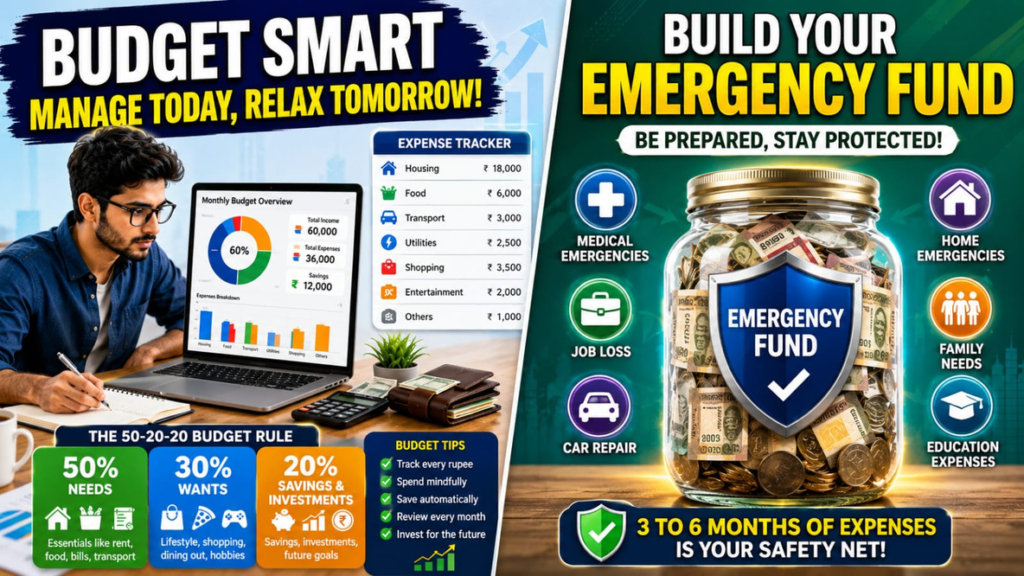
Try the 50-30-20 rule:
- 50% of income for needs like rent, food, bills
- 30% for wants like entertainment, shopping, eating out
- 20% for savings and investments
This is not a strict law. If you think like I do, you can adjust the numbers based on your city and lifestyle. Someone in a metro city may need to spend more on rent. Someone in a smaller town may save more. The point is to have a structure, not to follow it blindly.
A good budget is not about cutting all fun from life. It’s about spending on what matters to you and cutting what doesn’t. That’s the real goal of budgeting for beginners.
However, budgeting only works if you actually follow it, not just write it down once and forget it. Set a reminder for the first week of every month to sit with your numbers. Check if you overspent anywhere last month, and adjust the next month accordingly. Some months will have extra expenses like a festival or a birthday, and that’s completely normal. The idea is not perfection every single month, but staying close to your plan most of the time.
If budgeting feels hard at first, start with just one category, like food or shopping. Once you get comfortable controlling that one area, add the next one. This slow approach works far better than trying to change everything overnight and giving up after two weeks, which is what most beginners end up doing.
Step 3: Build Your Emergency Fund First
Before you think about investing, friends, please build an emergency fund. This is one part of the Beginner Financial Roadmap that people often skip, and later they regret it badly.
An emergency fund is simply three to six months of your basic expenses, kept safe and easy to access. It’s not for shopping sales or vacations. It’s for real emergencies like job loss, medical issues, or sudden family needs.
In my experience, one bad emergency without savings can push you into debt for years. I have seen friends take personal loans at high interest just because they had zero backup fund. Don’t let that be you.
Start small if needed. Even saving a small fixed amount every month in a separate savings account works. Slowly build it up. This fund is your safety net, and every strong Beginner Financial Roadmap starts here.
Keep this fund separate from your regular savings account, the one you use for daily spending. If it’s too easy to access, you might end up using it for non-emergencies, like a sale or a new gadget. A separate account, or even a liquid fund, creates a small gap that makes you think twice before touching it.
Also, don’t feel bad if this takes time to build. Six months of expenses can feel like a big number when you’re just starting out. Instead, divide it into a smaller monthly goal. Even a modest amount saved consistently every month will get you there within a year or two. The goal is progress, not instant perfection.
Step 4: Understand Saving vs Investing
Many beginners confuse saving and investing, so let’s clear this up. Saving means keeping money safe, usually in a bank account, for short term needs. Investing means putting money into things like mutual funds, stocks, or other assets that can grow over time, but with some risk involved.
Here is the honest truth. Just saving money in a normal bank account will not build wealth. Inflation eats into it slowly every year. However, investing without any knowledge is also risky and can lead to losses.
For beginners, a simple starting point is:
- Keep your emergency fund safe in savings.
- Start small investments through SIP (Systematic Investment Plan) in mutual funds.
- Learn slowly before putting big amounts anywhere.
- Never invest money you need in the short term.
This balance between saving and investing for beginners is a core part of any solid financial plan.
Step 5: Manage and Reduce Debt Wisely
Debt is not always bad, but bad debt can ruin your financial roadmap completely. A home loan or education loan can be useful. But high-interest credit card debt or instant app loans can trap you fast.
If you already have debt, don’t panic. Here is a simple approach:
- List all your debts with interest rates.
- Pay the minimum on all, but pay extra on the highest interest one first.
- Avoid taking new debt for wants, not needs
- Always pay credit card bills in full, not just the minimum.
I made this mistake once, paying only the minimum on a credit card. The interest kept growing, and it took me months extra to clear it. Learn from my mistake, friends. Debt management is a key pillar of your financial roadmap.
Step 6: Set Clear Financial Goals
A roadmap without a destination is useless. That’s why goal setting matters so much in this Beginner Financial Roadmap. Your goals give your savings and investing a real purpose.
Break your goals into three types:
- Short term (within 1 year): phone upgrade, small trip, gadget
- Medium term (1 to 5 years): car, wedding, higher education
- Long term (5+ years): house, retirement, financial freedom
Write these goals down with rough amounts and timelines. This makes them real instead of just wishes. When you know what you’re saving for, it’s much easier to stay focused and save consistently.
Common Mistakes Beginners Make With Money
Let’s be real for a moment. Many beginners make the same mistakes again and again. Here are a few honest ones:
- Spending first, saving whatever is left (do the opposite instead)
- No emergency fund before investing
- Following friends into investments without understanding them
- Ignoring small daily expenses
- Not reviewing their budget or goals regularly.
If something is bad, I will say it clearly, and this habit of copying others blindly in investing is genuinely risky. Always understand where your money is going before you put it anywhere.
Building Smart Money Habits for Long-Term Success
A Beginner Financial Roadmap is not a one-time task. It’s a habit you build over months and years. Review your budget every month. Increase your investment amount slowly as your income grows. Keep learning about personal finance through simple, trusted sources.
Doing a little every day is better than doing a lot once in a while. This is true for fitness, and it’s equally true for money. Start small, stay consistent, and your financial situation will improve steadily through 2026 and beyond.
Disclaimer
This article is for general informational and educational purposes only. It does not constitute financial or investment advice. Please consult a certified financial advisor before making any major financial or investment decisions based on your personal situation.
FAQ's
What is a Beginner Financial Roadmap?
It’s a simple step-by-step plan covering budgeting, saving, emergency funds, and investing, designed to help beginners manage money confidently and build long-term financial stability.
How much should a beginner save every month?
Aim for at least 20% of your income, but even 10% is a good start. Consistency matters more than the exact amount when you’re beginning.
Is investing safe for complete beginners?
Investing carries risk, but starting small through SIP in mutual funds after building an emergency fund is a safer, beginner-friendly approach to grow wealth gradually.
How big should my emergency fund be?
Generally three to six months of essential expenses. This cushion protects you during job loss, medical emergencies, or unexpected situations without forcing you into debt.
What is the easiest budgeting method for beginners?
The 50-30-20 rule works well. Fifty percent for needs, thirty percent for wants, and twenty percent for savings and investments each month.
Should I pay off debt before investing?
Yes, especially high-interest debt like credit cards. Clear costly debt first, then focus on building your emergency fund and starting small investments.