Best Money Management Tips for Beginners in 2026
Most of us were never taught at school how to handle money. No one sat us down and said, ‘Hey, this is how you save money, how you spend money, and how you grow money.’ And for this reason, if you look at it, many people in their 20s or 30s feel completely uncomfortable talking about personal finance.
I remember the first time I worked in my life and got my first salary. I was super happy. But by the 20th of the month, I was already broke. No savings, no planning, just random spending. I felt terrible about it in my life. And trust me, I know this feeling is very common.
That’s why today, through this article, I want to share the Best Money Management Tips for Beginners in 2026. They’re simple, honest, and practical if you follow some rules mentioned below. No complicated financial jargon. No show-off. Just real advice that works.
Why Money Management Tips Matter More Than Ever in 2026
Honestly, tell me. How many times have you told me or your friends, ‘I’ll really start saving from next month’? And next month came and went, and nothing changed.
The truth is, 2026 is a different world. Prices are rising. Jobs are getting more competitive. And if you do not have a solid plan for your money, it is very easy to fall behind. Good money management tips are not just for rich people or finance experts. They are for everyone, including you and me.
In my experience, the people who are financially stable are not always the ones who earn the most. They are the ones who manage what they earn very well. And that is the key difference.
Here is why building smart spending habits and doing proper budget planning matters in 2026:
- Inflation is real, and your expenses keep going up.
- Emergency situations can come anytime without warning.
- Financial stress affects your mental health and daily life.
- Good money habits today build a strong future for tomorrow.
- Saving and investing early gives you more options in life.
Now let’s talk about the actual tips that will help you get started.
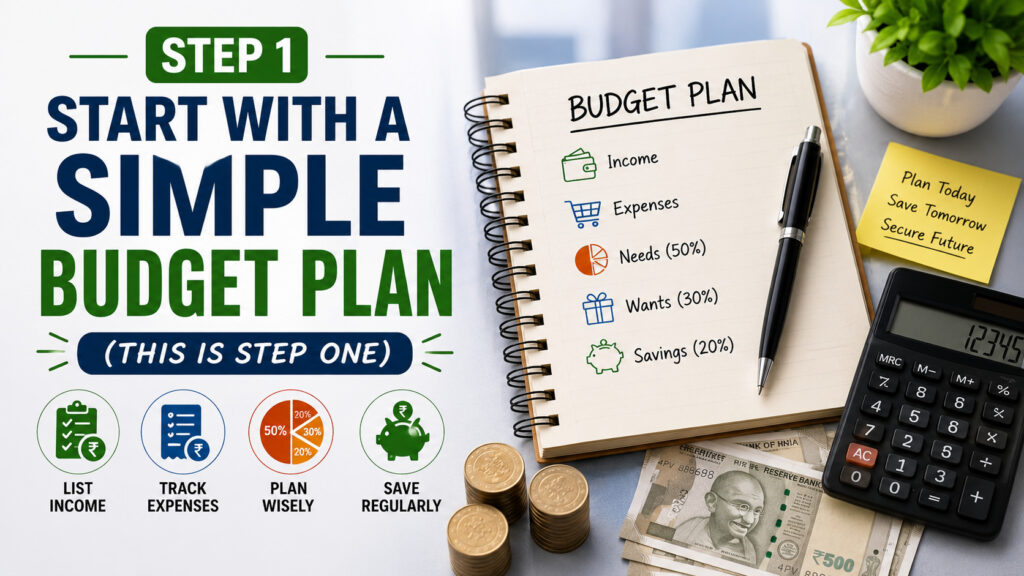
Start With a Simple Budget Plan (This is Step One)
If you think as I do, you probably hate the word “budget.” It sounds boring and restrictive. But honestly, a budget is just a simple plan for your money. Nothing scary about it.
Budget planning is the foundation of all good personal finance tips. If you look at it, without a budget, you don’t even realize where and how much of your money is being spent. And when you do not know where it goes, it just disappears.
How to Create a Budget in 3 Easy Steps
Step one is to write down your total income. This includes your salary, freelance work, pocket money, or any other source. Just know how much money comes in every month.
Step two is to list all your expenses. Think about rent, food, transport, phone bills, subscriptions, and entertainment. Write every single thing down. Even that daily chai or coffee adds up over time.
Step three is to compare your income and expenses. If your expenses are more than your income, you have a problem. If income exceeds expenses, great. Now decide how much you want to save.
A very popular method is the 50/30/20 rule. This means 50% of your income goes to needs like rent and food. 30% goes to wants like shopping and eating out. And 20% goes directly to savings or investments. This is one of the best money-saving tips because it is very simple and easy.
Try this for just one month and see how different it feels to have a plan. You will be surprised.
Small Habits That Save Big Money Over Time
First, stop buying things on impulse. We have all done it. You go to buy one thing online and end up buying five. Before buying anything that is not planned, wait 24 hours. Most of the time, you will not buy it after that. This one habit alone can save you thousands of rupees every month.
Second, cook at home more often. Eating out is fun, but it is expensive. Even ordering food through apps daily can drain your wallet very fast. Cook simple meals at home and save the restaurant visits for special occasions.
Third, cancel subscriptions you do not use. Check your phone right now. I bet you have at least two or three apps or services you are paying for but barely use. Cancel them today. Those small monthly charges add up to a big number by the end of the year.
Fourth, use cashback apps and offers smartly. In 2026, many UPI apps and credit cards offer cashback and rewards. Use them. But do not spend extra just to earn rewards. Use them for things you were going to buy anyway.
Fifth, set up automatic savings. As soon as your salary comes in, transfer a fixed amount to a separate savings account. Do this before you spend anything else. This way, you save first and spend what is left. This is the smartest of all money management tips for beginners.
Smart Spending Habits That Change Everything
Now let’s talk about spending. Because the goal is not to stop spending. The goal is to spend smartly. Smart spending habits are what separate people who are always broke from people who always have money left at the end of the month.
Know the Difference Between Needs and Wants
This is basic, but most people forget it. A need is something you cannot live without, like food, rent, medicine, and transport to work. A want is something nice to have but not necessary, like a new phone when your current one works fine, or the latest sneakers.
In my experience, most financial problems come from treating wants like needs. You do not need a new phone every year. You do not need to upgrade your TV just because a better one came out. Learn to be happy with what you have and upgrade only when it is truly needed.
Avoid Lifestyle Inflation
This is a big one, buddy. Lifestyle inflation means that when your income goes up, your expenses go up at the same rate. So even if you earn more money, according to me, you probably save the same amount or even less.
When you get a salary hike or a bonus, resist the urge to immediately upgrade your lifestyle. Instead, increase your savings first. Then, if there is still extra money, enjoy a little upgrade. This is one of those personal finance tips that most young professionals ignore and regret later.
Use the One-In-One-Out Rule for Shopping
This is a simple trick. Every time you buy something new, remove something old. This keeps your spending in check and prevents unnecessary accumulation. If you want to buy a new pair of shoes, first decide which old pair you will give away or sell.
Financial Planning for Your Future (Start Early, Thank Yourself Later)
Okay, so we talked about budgeting, saving, and spending smartly. Now let’s talk about financial planning for the long term. Because managing money is not just about today. It is about building a secure future.
Build an Emergency Fund First
Before you think about investing or any big financial goal, build an emergency fund. This is money kept aside only for real emergencies like job loss, health issues, or urgent home repairs.
A good emergency fund should cover 3 to 6 months of your basic living expenses. Keep this money in a savings account where you can access it quickly. Do not invest it in stocks or mutual funds because you might need it fast.
This is one of the most important money management tips for beginners because without an emergency fund, any small crisis can push you into debt.
Start Investing Even With Small Amounts
A lot of beginners think investing is only for people with a lot of money. That is completely wrong. In 2026, you can start investing with as little as 100 or 500 rupees through SIP in mutual funds.
The earlier you start, the more your money grows over time because of something called compound interest. Even investing a small amount every month for 10 or 20 years can build a large corpus. Start small, stay consistent, and do not stop.
Get Basic Insurance Coverage
This is not exciting, I know. But health insurance and term life insurance are non-negotiable if you are serious about financial planning. One big medical bill without insurance can wipe out your entire savings.
If you are a young working professional, get a basic health insurance plan. If you have family dependents, get term life insurance too. These protect everything you are working so hard to build.
How to Manage Money Effectively Every Month
Managing money is not a one-time thing. It is a monthly habit. Here is a simple routine you can follow every month to stay on track with your money management tips.
At the beginning of the month, hi, definitely review your budget once. Set your savings target. Plan your big expenses, if any.
During the month, track your spending. Use any simple app or even a notebook. Just note down what you spend each day. This keeps you aware and in control.
At the end of the month, definitely review how you performed with the money. Did you save your target amount? Did you overspend anywhere? What can you do differently in your budget next month?
This simple monthly review process is how people actually improve their money habits over time. Most beginners skip this step and wonder why nothing changes.
Common Money Mistakes Beginners Should Avoid
Let me be direct here. These are the mistakes that most beginners make. Stay away from all these things, and you’ll already be ahead of most people.
Spending before saving: Always save first, spend what is left Taking loans for wants: Never go into debt for things you just want but do not need Ignoring small expenses: Small daily expenses add up to big numbers.
Not having a budget: Without a plan, money just disappears.
Delaying investing: Every year you delay is money lost in the long run
Keeping all money in one place: Diversify between savings, an emergency fund, and investments
Tell me the truth, buddy. Tell me the truth: how many of these mistakes have you made? I made most of these mistakes when I started. But recognizing them is the first step to fixing them.
Final Thoughts: Your Money, Your Future
If you ask me, managing money properly can really become one of the best skills in your life that can completely change it. To learn this, you don’t need a finance degree or a big salary. You just need a bit of awareness, discipline, and some good habits that, if you adopt in your life, will change it entirely.
First of all, the task is to make a simple budget. Think about saving before spending. Build your emergency fund, for which you should open a separate account. Invest even small amounts. Avoid lifestyle inflation. And review your finances every month.
If you or your friend understands these money-handling tips, then this isn’t a very difficult task. But they actually work in real life. And if you follow them regularly, by 2026 and beyond, your financial life will look very different and very good.
Bro, you can do this. Start today. Even a small step is better than waiting for that perfect moment that never comes.