
Finance Mantraa

Car Insurance Basics: Coverage, Types & Costs Explained

Friends, let’s be honest. Car insurance sounds boring, right? But trust me, once you understand it, it’s not hard at all. In this article, I will explain Car Insurance Basics in very simple words, just like I am sitting next to you and explaining it over a cup of coffee. No hard English words, no confusing terms. Just plain talk.

I remember when I bought my first car. I had no idea what car insurance really meant. I just paid the amount the dealer asked and signed the papers. Later, when I got into a small accident, I realized I didn’t even know what my policy covered. That day taught me a big lesson. So today, I want to save you from that same confusion.

By the end of this article, you will understand what car insurance is, how car insurance works, the different types of car insurance, and how much car insurance coverage do I need. Let’s start.

Highlight key

  • Car insurance protects you financially if your car gets damaged or you cause an accident.
  • There are mainly two types: Third-party car insurance and Comprehensive car insurance.
  • Car insurance premium depends on your car type, age, location, and driving history.
  • A car insurance deductible is the amount you pay before insurance starts paying.
  • Filing a car insurance claim is easy if you follow the right steps.
  • Understanding car insurance policy terms helps you avoid surprises later.

What is Car Insurance and How Does It Work?

Let’s talk about the basics first. Car insurance is simply an agreement between you and an insurance company. You pay a small amount every year, called a premium, and in return, the company promises to cover certain costs if your car gets damaged, stolen, or if you hurt someone in an accident.

Now, how does car insurance work in real life? Suppose your car hits another vehicle. If you have the right coverage, your insurance company pays for the damage instead of you paying everything from your own pocket. This is why understanding Car Insurance Basics is so important. It’s not just a legal requirement; it’s real protection for your money.

In my experience, many people buy car insurance just because it’s mandatory by law. But friends, that’s the wrong way to look at it. Think of it like a safety net. You hope you never need it, but when something goes wrong, you will be thankful you have it.

Car insurance explained simply means this: you share your risk with the insurance company. Instead of you facing a huge loss alone, the company helps you carry that burden. That’s the whole point of Car Insurance Basics.

Car Insurance Basics for Beginners

If you are new to this topic, don’t worry. Every car owner was a beginner once. Let’s break down Car Insurance Basics for beginners into simple points.

First, every car insurance policy has some common parts. There is the premium, which is what you pay. There is the coverage, which is what the insurance actually protects. There is the deductible, which is your share of the cost during a claim. And there is the policy period, which is how long your insurance stays active, usually one year.

Second, tell me the truth: have you ever read your full policy document? Most people don’t. They just sign and move on. But if you spend even 15 minutes reading it, you will understand exactly what you are paying for.

Third, car insurance is not one-size-fits-all. A person driving an old car in a small town may need different coverage than someone driving a new car in a busy city. So always match your policy to your actual needs.

If you think as I do, insurance is not an expense; it’s an investment in peace of mind. Once you understand these basics, choosing the right policy becomes much easier.

Types of Car Insurance Coverage

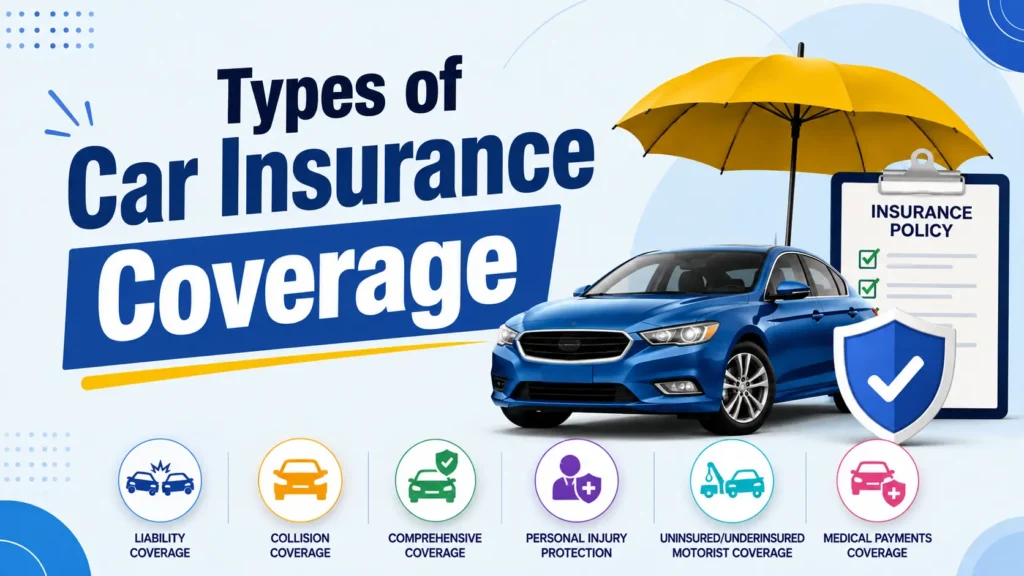
Now, let’s explore the different types of car insurance and understand what each type covers. This is where most people get confused, so I will keep it very simple.

Car Insurance Basics: Coverage, Types & Costs Explained

Third-Party Car Insurance

Third-party car insurance is the most basic type. It only covers damage or injury you cause to another person or their vehicle. It does not cover your own car’s damage. This type is usually cheaper and, in many countries, it’s the minimum required by law.

However, here is the bad part. If your own car gets damaged in the accident, third-party insurance will not pay for it. You will have to pay out of pocket. So while it’s cheap, it’s also limited.

Comprehensive Car Insurance

Comprehensive car insurance is a bigger and better option. It covers damage to your own car as well as damage to others. It also covers theft, fire, natural disasters, and other unexpected events.

Yes, comprehensive car insurance costs more than third-party insurance. But in my experience, the extra cost is worth it, especially if you have a new or expensive car. I switched to comprehensive coverage after my small accident, and honestly, it gave me much better peace of mind.

Collision Coverage

Collision coverage is a part of comprehensive insurance. It specifically covers the cost when your car collides with another car or object, like a wall or a pole. Even if the accident was your fault, collision coverage still pays for your car’s repair.

Personal Injury Protection

Personal injury protection, often called PIP, covers medical expenses for you and your passengers if you get hurt in an accident. This is very useful because medical bills can be very high, and this coverage takes that stress away.

Now let’s talk about which one you should pick. If your car is old and low value, third-party might be enough. But if your car is new or costly, comprehensive coverage is clearly the smarter choice. This is one of the core Car Insurance Basics you must remember before buying any policy.

What Does Car Insurance Cover?

This is one of the most common questions people ask. What does car insurance cover, exactly? Well, it depends on the type of policy you choose, but generally, car insurance can cover:

  • Damage to your own car from accidents
  • Damage you cause to another person’s car or property
  • Theft of your vehicle
  • Fire damage
  • Natural disasters like floods or storms
  • Medical expenses for injuries
  • Legal costs in case of a court case related to the accident

However, friends, car insurance does not cover everything. Regular wear and tear, mechanical breakdown, or damage from driving without a valid license are usually not covered. So always check the exclusion list in your policy carefully. If something is bad or limited in your policy, it’s better to know it now than during a claim.

Car Insurance Premium: How Is It Calculated?

Car insurance premium is the money you pay to keep your insurance policy active. But have you ever wondered how a car insurance premium is calculated? It’s not random. Several factors affect it.

Your car’s age, model, and value play a big role. A brand-new expensive car will have a higher premium than an old budget car. Your location also matters. If you live in a city with heavy traffic and more accidents, your premium may be higher.

Your driving history matters a lot too. If you have made many claims in the past, your premium usually increases. On the other hand, safe drivers with no claims often get discounts, sometimes called a no-claims bonus.

Now let’s talk about something important. The level of coverage you select directly influences the premium you pay. Comprehensive car insurance will always cost more than third-party insurance because it covers more things. This is simple logic: more protection means more cost, and understanding this pricing logic is a key part of Car Insurance Basics.

Car Insurance Deductible Explained

Let’s talk about a term that confuses many beginners the deductible. A car insurance deductible is the amount you agree to pay from your own pocket before your insurance company pays the rest.

For example, if your deductible is a fixed amount and your repair cost is higher than that, you pay your part first, and the insurance company pays the remaining amount. Simple, right?

Here is an important tip. A higher deductible can help lower your premium, while a lower deductible usually means paying a higher premium. So, you need to balance this based on your budget. If you can afford to pay a bit more during a claim, choosing a higher deductible can save you money every year on your premium.

How to Choose the Right Car Insurance Coverage

Friends, this is the real question everyone asks. How to choose the right car insurance coverage for yourself? Let me make it simple with a few practical tips.

  • Check your car’s value. Expensive cars need comprehensive coverage.
  • Think about your driving habits. If you drive daily in heavy traffic, more coverage makes sense.
  • Compare car insurance premium quotes from different companies before deciding.
  • Read the policy terms carefully; don’t just trust the agent’s words.
  • Check what add-ons are available, like zero depreciation or roadside assistance.

How much car insurance coverage do I need? Honestly, there is no fixed answer for everyone. It depends on your car, your budget, and how much risk you are willing to take. But as a general rule, never choose the cheapest policy just to save money. Sometimes cheap policies come with very limited coverage.

How to File a Car Insurance Claim

Now let’s talk about something practical, how to file a car insurance claim. Many people panic during this process, but it’s actually quite simple if you follow the right steps.

First, inform your insurance company as soon as possible after the accident. Second, take photos of the damage from different angles. Third, file a police report if the accident is serious or involves another vehicle. Fourth, submit all required documents to your insurer, including your policy number and accident details.

In my experience, the biggest mistake people make is delaying the claim process. The longer you wait, the more complicated it becomes. So act quickly and keep all your documents ready.

Car Insurance Policy Terms Explained

Understanding car insurance policy terms is very important, but most people skip this part. Let’s simplify a few common terms.

Premium is what you pay for the policy. Coverage is what the policy protects. Deductible is your share of the cost during a claim. Exclusions are things not covered by your policy. No-claim bonus is a discount you get for not making claims. Sum insured is the maximum amount the insurer will pay.

Once you understand these car insurance policy terms, reading any insurance document becomes much easier. You won’t feel lost anymore, and honestly, this small effort is what separates someone who truly knows Car Insurance Basics from someone who is just guessing.

Benefits of Car Insurance

Let’s end this section with the car insurance benefits, because honestly, there are many.

  • Financial protection during accidents
  • Legal compliance with the law
  • Coverage for theft and natural disasters
  • Peace of mind while driving
  • Medical cost coverage for injuries
  • Protection against third-party liability claims

Now let’s talk honestly. If something is good, I will say it clearly, and car insurance truly is good when you choose the right policy. It protects you from financial stress during the worst moments, which is why learning Car Insurance Basics is never a waste of time.

Disclaimer

This article is for general information only. Car insurance rules, coverage options, and premium calculations can vary by country, state, and insurance provider. Please consult a licensed insurance agent or your insurance company before making any final decision.

FAQ's

What is car insurance and how does it work?

Car insurance is an agreement where you pay a premium, and the company covers costs for accidents, theft, or damage, giving you financial protection and peace of mind.

Third-party covers only damage to others, while comprehensive covers your own car too, including theft, fire, and natural disasters, offering wider protection overall.

A deductible is the amount you pay from your pocket before insurance covers the rest. Higher deductibles usually mean lower yearly premiums.

Premium depends on your car’s age, value, location, driving history, and coverage type. Safe drivers often get discounts through a no-claim bonus.

Inform your insurer quickly, take photos, file a police report if needed, and submit documents. Acting fast makes the claim process smoother.

It depends on your car’s value, budget, and driving habits. Expensive cars generally need comprehensive coverage for better financial protection.

Section Title

Car Insurance Basics: Coverage, Types & Costs Explained

Friends, let’s be honest. Car insurance sounds boring, right? But trust me, once you...

Dhoot Transmission IPO Allotment 2026: Check Status & Result

Friends, if you or any of your family members have applied for the Dhoot Transmission IPO, then you...

How to Pay Off Debt Faster: 10 Smart Strategies to Get Debt-Free

Friends, if you are stressed about loans and credit card bills, you are not alone. I remember a time...

India Economy at $3.92 Trillion: GDP, Growth & Govt View

Friends, have you heard the big news? India economy has now reached $3.92 trillion. Yes, you read...

10 Credit Card Mistakes You Must Avoid in 2026

Friends, let’s talk honestly today. A credit card can be your best friend or your worst enemy...

What Is RSI? Powerful Trading Indicator Explained for Beginners

Friends, if you have ever looked at a stock chart and felt totally lost, don’t worry, I was...

What Is an IPO? Meaning, How It Works & How to Invest

Have you ever read a headline like, “Company XYZ’s share price jumped 40% on its listing day” and...

How to Read an Options Chain: Beginner’s Guide to OI & PCR

Friends, have you ever opened an options chain on your trading app and felt totally lost? So many...

15 Money Rules Everyone Should Know to Build Wealth

Introduction Friends, let’s talk about money today. Not in a boring, textbook way, but like I...

Friends, have you ever been in a situation where you suddenly needed money but did not know what to do? Many people face this problem. A few years ago, one of my family members needed money for an emergency, and we quickly realized how important it is to understand the personal loan Guide process before applying.

That experience inspired this guide. In this article, I will explain everything about personal loans in simple and easy English. You will learn how to choose the right loan, compare lenders, and get the lowest interest rate in 2026. There are no difficult words or confusing terms—just clear, practical information that anyone can understand.

Leave a Comment