
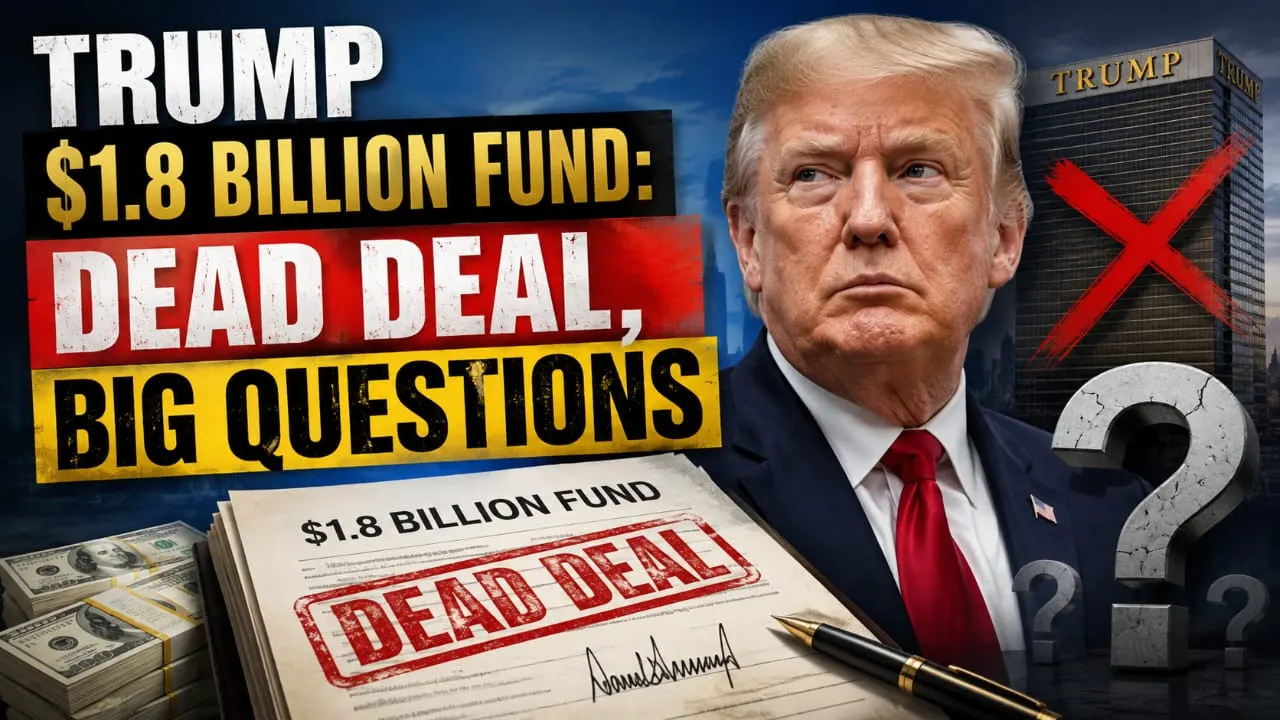
Hey buddy, have you heard the latest news about Trump $1.8 billion fund? If not, don’t worry, I’ll explain it to you in very simple words. This story is big news right now in both the US and India, and honestly, it feels like some movie. Tons of money, a court fight, and a judge who doesn’t want to let it go quietly at all. So, grab your tea or coffee, and let’s talk about this like two friends chatting on a Sunday evening.
What Is This Trump $1.8 Billion Fund All About?
Let’s start from the start. The Trump $1.8 Billion Fund is also called the Anti-Weaponization Fund. It was set up as part of a settlement. This settlement was between President Donald Trump (along with two of his sons and his company) and the IRS, which is the tax department of the USA.
Basically, Trump had sued the IRS over a leak of his tax returns. Instead of going through a full trial, both sides agreed to settle. As part of that settlement, the government agreed to set aside almost $1.8 billion in taxpayer money.
This money was meant to pay people who, according to the fund’s supporters, “suffered weaponization and lawfare.” In simple words, this means people who feel the government used its power unfairly against them.
Now here is the twist, buddy. This payout could also reach some people who took part in the January 6 Capitol riot, were convicted of violent crimes, and were later pardoned by Trump. That part alone created a huge storm.
Why Did So Many People Get Angry About This Fund?
Tell me the truth: if you heard that taxpayer money might go to people convicted of violent crimes, would you feel okay about it? Most people did not feel okay, and that is exactly why the backlash started so fast.
Here are some quick highlights of why the anger grew so big:
- The fund used taxpayer money, not private funds.
- It could benefit Jan 6 rioters who were pardoned.
- The same settlement also gave Trump and his family protection from future IRS audits.
- Even some Republicans were not comfortable with it.
- A group of former federal judges questioned if the whole thing was even legal
In my experience, when a story crosses party lines and even people from the same side start asking questions, you know something serious is going on. That is exactly what happened here with the Trump $1.8 billion Anti-Weaponization Fund.
How Did the Courts Get Involved?
Once the fund was announced, lawsuits started coming in fast. A fired January 6 prosecutor and a law professor, who had themselves been sued by the Trump administration, filed a case. Later, some career IRS employees also joined the fight against this fund.
U.S. District Judge Leonie Brinkema, based in Virginia, stepped in first. She temporarily blocked the fund in late May, saying the government could not move forward with setting it up until the court looked at it more closely.
As the pressure grew, Attorney General Todd Blanche told Congress that the government was dropping the plan. He even called the fund “dead” in public statements. Sounds like the end of the story, right? Well, not so fast.
Wait, If the Fund Is Dead, Why Is a Judge Still Asking Questions?
Now let’s talk about the real twist in this whole Trump fund judge ruling saga. Even after Blanche said the fund was finished, Judge Brinkema was not fully convinced. She wanted written proof, not just spoken promises.
She asked the Department of Justice to submit a sworn written declaration confirming the fund would not come back. This declaration needed signatures from both the acting attorney general and the Treasury secretary.
However, President Trump did not exactly help calm things down. In an interview that aired on a popular Sunday show, he said something like this, in short, that he thinks the fund is a great idea and many other Republicans agree with him too.
Judge Brinkema noticed this and said his comments “carry a lot of weight.” In simple words, if the president himself keeps saying the plan is good, how can anyone be sure it is truly cancelled?
If you think as I do, this is the classic case of someone saying “it’s over” with their mouth, while their actions and words hint at something else.
The Big News Now: Judge Wants the Fund's Architects Named
Here comes the newest part of the story, the reason everyone is talking about the Trump $1.8 billion fund again. A U.S. Magistrate Judge in the Eastern District of Virginia has now ordered the Trump administration to reveal the names of the people who actually designed and built this fund.
Yes, buddy, the judge wants to know who the real Anti-Weaponization Fund architects were. This order came after the plaintiffs asked the court to compel the government to share this information through the discovery process.
A senior lawyer from Democracy Forward, one of the groups fighting this case, called this discovery order a big step forward in figuring out the truth behind what critics are calling a “slush fund.”
Think of it like this. If someone builds a car that later crashes and hurts people, you would want to know who designed it, right? That is exactly what this judge is doing here. Even though the fund itself is closed, the people who created it may still need to explain their role.
What Happens Next With the Anti-Weaponization Fund Case?
Now let’s talk about what could come next. Here is what we can expect:
- The government will likely have to share internal names and documents.
- More hearings may happen in the coming weeks.
- Political pressure is still high from both major parties.
- The case could shape how future settlements with the IRS are handled.
- It may also affect how much trust the public places in future government funds.
Honestly, even though the fund itself has stopped, this legal case is far from finished. Many people are searching for “Trump $1.8 billion fund latest news 2026” because they want to see how deep this investigation goes.
Should You Care About This Fund If You Are Not in the USA?
You might be sitting in India or anywhere else and wondering why this matters to you. Well, here is a simple comparison for you. Imagine two friends split a big restaurant bill unfairly, and one friend later tries to hide the receipt. Wouldn’t you still want to see that receipt, even if you were not the one who ate the food?
In the same way, big legal and financial decisions in the USA often affect global markets, trust in institutions, and even how other countries view political fairness. That is why stories like the Trump Anti-Weaponization Fund get attention worldwide, not just inside America.
My Honest Take on This Whole Situation
Let’s be real for a second. On one side, the idea of helping people who were truly wronged by unfair government action does not sound bad by itself. However, the way this fund was designed, with taxpayer money and a possible path for pardoned rioters to get paid, does raise fair questions.
If something is done in a messy or unclear way, it is okay to say it clearly. And this entire process has been messy from the start. Announcing a fund, facing backlash, saying it is cancelled, yet still defending it in interviews- that is not exactly a smooth or transparent process.
At the same time, we should also stay fair. Right now, this is still an ongoing legal matter. Nothing has been proven as illegal in a final court decision yet. So, it is best to follow this Trump fund judge ruling story with an open mind and wait for more facts to come out through the discovery process.
Quick Recap Before You Go
Let’s sum up everything so it sticks in your mind easily:
- The Trump $1.8 Billion Fund, known as the Anti-Weaponization Fund, came from an IRS settlement.
- It was blocked by federal judges soon after it was announced.
- The Trump administration later called the fund “dead”
- Despite that, a judge has now ordered the government to name the fund’s architects.
- The legal fight is still active, even though the fund itself is not moving forward.
Buddy, if there is one thing to take from this whole story, it is this: just because something is called “dead” does not always mean the questions around it are finished too.
Disclaimer: This article is written for general information and educational purposes only. It is based on publicly reported news as of early September 2026 and may not reflect the latest developments, since legal cases can change quickly. This is not legal advice, and readers should check official court records or trusted news sources for the most current updates before forming a final opinion.
FAQ's
What is the Trump $1.8 Billion Fund?
It is a settlement fund called the Anti-Weaponization Fund, created after Trump’s tax return leak case with the IRS, using taxpayer money for payouts.
Why was the Trump Anti-Weaponization Fund blocked?
A federal judge blocked it after lawsuits argued the fund could unfairly pay pardoned Jan 6 rioters using public taxpayer money without proper legal approval.
Is the Trump $1.8 billion fund officially cancelled now?
The administration called it “dead,” but a judge still ordered discovery, so full closure isn’t confirmed, and questions remain about its true status.
Who are the Anti-Weaponization Fund architects?
Their identities were not fully public before; a court discovery order now requires the administration to reveal who designed and structured the fund.
Why does a judge still want answers if the fund is over?
The judge wants written proof and clear accountability, since verbal statements alone did not satisfy concerns about transparency and possible future revival.