

The Binance hack in October 2026 has shocked the cryptocurrency industry. The world’s largest cryptocurrency exchange confirmed a major security incident in which hackers stole about $6.3 billion in crypto assets from its hot wallets.
The attack happened on October 29, 2026, and most of the funds were moved within approximately 20 minutes. Blockchain security experts described it as one of the biggest cryptocurrency thefts ever reported.
If you use Binance or hold cryptocurrency on an exchange, you may have several questions. How did the hackers get access? Are Binance users’ funds safe? Will the company refund the stolen money?
In this article, we will explain what happened, what Binance has confirmed, how the attack affected the crypto market, and what investors should do to protect their digital assets.
In This Article
ToggleHighlight key
- Date of attack: October 29, 2026.
- Estimated amount stolen: Approximately $6.3 billion.
- Affected networks: 10 blockchain networks, according to TRM Labs.
- Time taken: Most of the funds were transferred within approximately 20 minutes.
- Frozen assets: Binance reported that approximately $3 billion had been frozen on-chain.
- Binance’s response: The exchange promised to cover the financial impact using its SAFU fund and corporate treasury.
- Investigation: Blockchain intelligence firms have linked the attack to North Korean hackers, but the investigation is ongoing.
What Happened in the Binance Hack?
Binance confirmed a major security incident involving unauthorized withdrawals from its hot wallets on October 29, 2026.
According to the exchange’s official security update, the incident began at approximately 20:05 UTC. Around $6.3 billion worth of cryptocurrency assets was affected.
The attackers targeted Binance’s transaction-processing infrastructure and moved funds across multiple blockchain networks. According to blockchain intelligence firm TRM Labs, most of the stolen assets were transferred within roughly 20 minutes.
After discovering the suspicious activity, Binance temporarily suspended withdrawals while its security team investigated the incident.
The exchange also worked with law enforcement agencies, blockchain investigators, cryptocurrency issuers, and other industry partners to trace and freeze the stolen assets.
According to Binance’s October 30 update, approximately $3 billion had been frozen on-chain.
This incident has raised serious questions about the security of centralized cryptocurrency exchanges, even when they operate at a global scale.
How Did Hackers Attack Binance Hot Wallets?
To understand this incident, you first need to understand what a hot wallet is.
A hot wallet is a cryptocurrency wallet connected to the internet. Exchanges use hot wallets to process deposits and withdrawals quickly.
A cold wallet, on the other hand, stores cryptocurrency offline and is generally less exposed to online attacks.
Think of a hot wallet as a cash register in a shop. It is convenient because money can be accessed quickly. A cold wallet is more like a locked bank vault, which offers stronger protection but takes longer to access.
In the Binance incident, attackers reportedly compromised the exchange’s transaction-signing infrastructure, which helps authorize cryptocurrency transfers.
Binance initially suspected that a compromised employee or DevOps engineer’s laptop might have been involved. However, its later investigation identified additional points of breach.
Blockchain security researchers suggested that attackers may have manipulated the system responsible for approving wallet transactions.
Importantly, Binance stated that it had found no evidence that wallet private keys were leaked.
The complete technical details have not yet been independently established. Therefore, readers should treat specific explanations of the attack method as preliminary until Binance publishes its full technical investigation.
Who Was Behind the Binance Crypto Theft?
One of the biggest questions is who carried out the attack.
Blockchain intelligence firms TRM Labs and Chainalysis have linked the incident to North Korean state-sponsored hackers associated with the TraderTraitor group.
These hacking groups have previously been linked to several major cryptocurrency thefts.
According to security researchers, such groups often use sophisticated techniques, including malware, social engineering, and attacks targeting employees of cryptocurrency companies.
However, attribution by blockchain intelligence firms is not the same as a final legal determination. Binance has not officially confirmed the identity of the attackers.
The incident is also significant because the previous record-breaking cryptocurrency theft was the approximately $1.5 billion Bybit hack in 2025.
The estimated $6.3 billion Binance incident is substantially larger.
Is Binance Safe After the October 2026 Hack?
This is probably the most important question for Binance users.
The exchange has publicly stated that it will cover the financial impact of the incident and that users should not bear the losses.
According to Binance’s October 30 security update, the company has set aside more than $6.34 billion in company funds to cover the affected assets.
It also stated that approximately $5 billion was already held in the same types of cryptocurrencies that were stolen. The remaining assets were being purchased through market transactions and over-the-counter (OTC) channels.
Binance also reported that approximately $3 billion of the stolen assets had been frozen on-chain.
These are encouraging steps, but investors should understand the difference between a company’s financial commitment and independently verified proof that every customer balance is fully backed.
There are still important questions about the full technical cause of the attack, asset recovery, and the results of the updated Proof of Reserves report.
For now, users should follow Binance’s official announcements rather than relying on social media rumours.
What Happened to Binance Withdrawals After the Hack?
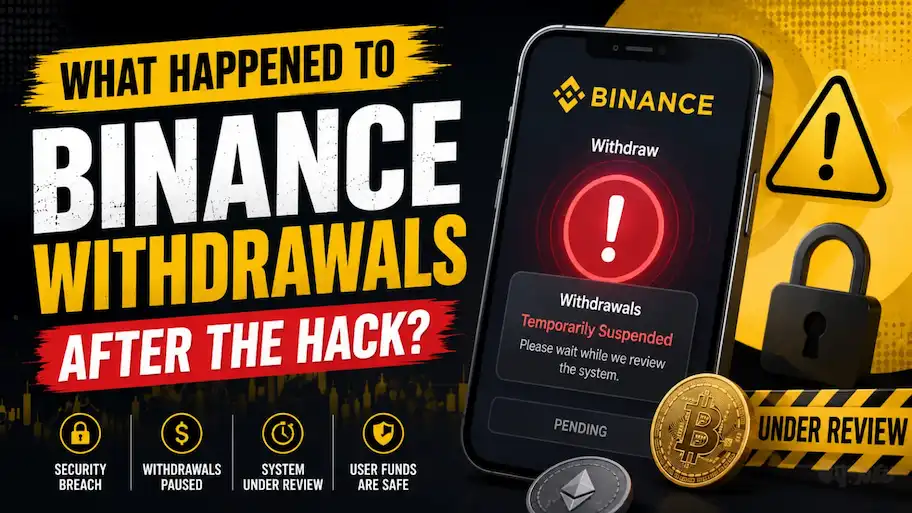
Following the security incident, Binance temporarily suspended withdrawals while it reviewed and upgraded its systems.
This was a precautionary step intended to prevent further unauthorized transactions.
In its October 30 update, Binance said it was targeting a phased restoration of withdrawal services within approximately 34 hours, subject to security checks.
However, a target timeline does not guarantee that every cryptocurrency and blockchain network will become available at the same time.
Users should check the official Binance website or app for the latest withdrawal status before attempting a transaction.
Deposits and other unaffected platform services were reported to remain operational in Binance’s October 30 update.
Will Binance Refund the Money Lost in the Hack?
Binance has promised to cover all losses associated with the incident.
The company said it would use its Secure Asset Fund for Users (SAFU) and corporate treasury to cover the financial impact.
SAFU is Binance’s emergency protection fund designed to help protect users in certain extreme situations.
The exchange has also stated that it is purchasing the remaining affected cryptocurrency assets and working with industry partners to recover frozen funds.
However, investors should not confuse a public commitment with a completed recovery process.
The actual recovery and replacement of assets should be assessed through subsequent official updates and independent verification.
Users should avoid anyone claiming to offer special Binance compensation or asking for passwords, private keys, or seed phrases.
How Did the Binance Hack Affect Bitcoin and Other Cryptocurrencies?
The Binance incident created uncertainty across the cryptocurrency market.
Bitcoin and other major digital assets came under selling pressure as investors reacted to the news.
According to market reports, Bitcoin briefly dropped below $77,000 following the incident.
However, it would be incorrect to blame the entire decline on the Binance hack. The broader crypto market was already facing weakness, and other market developments also influenced prices.
The incident also increased concerns about centralized exchange security and the risks of keeping large amounts of cryptocurrency on trading platforms.
Investors should remember that cryptocurrency prices are highly volatile. A security incident can influence market sentiment, but it does not automatically mean that Bitcoin or other cryptocurrencies will crash.
Avoid making investment decisions based only on breaking news or social media predictions.
Exchange Wallet vs Self-Custody: Which Is Better?
After a major exchange hack, many investors start thinking about moving their cryptocurrency into personal wallets.
Both exchange storage and self-custody have advantages and disadvantages.
| Exchange Wallet | Self-Custody Wallet |
|---|---|
|
Easy to trade |
You control your private keys |
|
Convenient account access |
Less dependence on an exchange |
|
Exchange manages wallet security |
You manage your own security |
|
Exposed to exchange-related risks |
Losing keys can mean losing access |
An exchange wallet may be convenient for active traders, while a personal wallet may be more suitable for long-term holders who understand how to manage private keys safely.
However, self-custody also comes with responsibility. If you lose your recovery phrase, you may permanently lose access to your funds.
There is no perfect solution for everyone. Choose the storage method according to your knowledge, needs, and risk tolerance.
7 Ways to Protect Your Crypto After the Binance Security Breach
The Binance incident is a reminder that cryptocurrency security should never be ignored.
Here are seven practical steps every crypto investor should consider.
1. Enable Two-Factor Authentication (2FA)
Use an authenticator app or a supported security key wherever possible. This adds another layer of protection to your account.
2. Never Share Your Password or Seed Phrase
No genuine exchange support representative should ask you to reveal your wallet seed phrase or password.
3. Use Official Binance Channels
Always visit Binance through its official website or app. Avoid clicking unknown links shared through emails, Telegram groups, or social media.
4. Set an Anti-Phishing Code
If the exchange offers an anti-phishing code, enable it. This can help you identify genuine emails from the platform.
5. Avoid Keeping All Your Crypto in One Place
Holding all your digital assets on a single exchange creates concentration risk. Consider suitable storage alternatives based on your experience.
6. Be Careful With Crypto Recovery Scams
After a major hack, scammers often contact users claiming they can recover stolen funds. Never pay an unknown person promising guaranteed recovery.
7. Avoid Panic Trading and Excessive Leverage
Sudden market movements can lead to emotional decisions. Avoid excessive leverage and understand the risks before making any trade.
Common Mistakes Crypto Investors Should Avoid
After hearing about a major cryptocurrency hack, investors can easily make mistakes.
Avoid these common problems:
- Clicking fake Binance compensation links.
- Sharing account passwords or wallet recovery phrases.
- Trusting unverified reports about stolen funds.
- Making panic-driven buying or selling decisions.
- Assuming that every exchange is completely safe.
- Ignoring two-factor authentication and account security.
- Believing that a company’s recovery promise is the same as completed compensation.
Staying informed and following verified updates can help you avoid unnecessary risks.
Conclusion
The October 2026 Binance hack shows that even the world’s largest cryptocurrency exchanges can face serious cybersecurity threats.
Binance has reported an estimated $6.3 billion impact and promised to cover the losses through its SAFU fund and corporate treasury. It has also reported that approximately $3 billion in stolen assets has been frozen.
These actions are important, but several questions remain unanswered, including the complete attack method, the identity of the attackers, and the final independent verification of customer asset backing.
For crypto investors, the biggest lesson is simple: never ignore security.
Use strong authentication, avoid suspicious links, protect your private keys, and understand the risks of keeping digital assets on centralized exchanges.
Disclaimer: This article is for educational and informational purposes only. It is not financial or investment advice. Cryptocurrency investments involve significant risks, and investors should conduct their own research before making financial decisions.
FAQ's
How much money was stolen in the Binance hack?
Binance estimated that approximately $6.3 billion worth of cryptocurrency assets was affected by the October 29, 2026 security incident.
Are Binance users' funds safe after the hack?
Binance has stated that it will cover all losses using its SAFU fund and corporate treasury. However, users should follow official updates and review the updated Proof of Reserves information.
Why was Binance hacked in 2026?
The attackers reportedly compromised Binance’s transaction-signing infrastructure. The complete attack method is still under investigation.
Can I withdraw money from Binance after the hack?
Binance temporarily suspended withdrawals while conducting security checks. It announced a phased restoration target, but availability may differ by cryptocurrency and network. Check the official platform for current status.
Who hacked Binance in October 2026?
TRM Labs and Chainalysis have linked the attack to North Korean hackers associated with TraderTraitor. The attribution has not been officially confirmed by Binance.
Will Binance refund the stolen cryptocurrency?
Binance has promised to cover the financial impact using its SAFU fund and company resources. The company has also been working to replace affected assets and recover frozen funds.

My name is Subodh Kumar, and I am a finance blogger at Financemantraa.com with a strong interest in personal finance, investing, and financial research spanning 4–5 years.
I enjoy researching financial topics and explaining complex money concepts in simple, easy-to-understand language. My areas of interest include stock market basics, IPOs, mutual funds, financial planning, insurance, saving strategies, and wealth building.
Through Financemantraa.com, I aim to help readers improve their financial knowledge, understand investment concepts, and make informed financial decisions. I focus on creating practical, beginner-friendly guides that make personal finance easier to understand and apply in everyday life.
I believe that financial education and smart money habits can help people work toward long-term financial stability. My goal is to make reliable, accessible, and informative financial content available to everyone.
Disclaimer: The information published on Financemantraa.com is for educational and informational purposes only. It should not be considered professional financial or investment advice.