
Highlight key
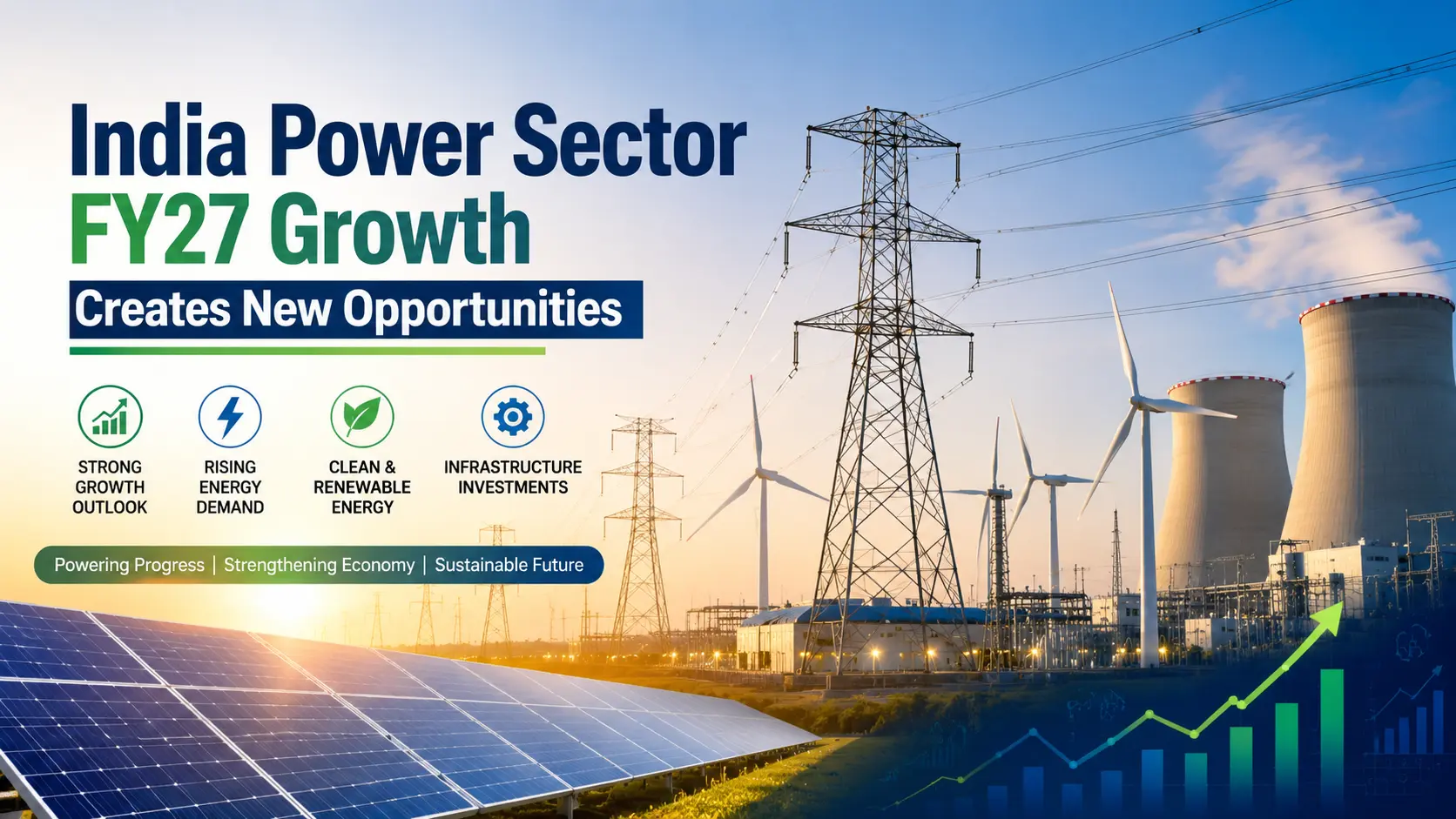
- India added around 16.8 GW of new power capacity in just one quarter, and most of it came from renewable sources.
- Overall power generation grew about 8 percent year on year.
- Electricity consumption touched nearly 485 billion units between April and June 2026
- Peak power demand hit 270.82 GW in May, mainly because of heatwaves and the delayed monsoon.
- Coal still contributes close to 70 percent of the total electricity generated in India.
Why Everyone Is Talking About India Power Sector FY27 Growth
Tell me the truth, have you noticed your electricity bill going up a bit these past few months? That is not just a coincidence. India’s power demand has actually picked up speed after a slow patch. In my experience, according to these reports, a sudden surge in this kind of demand usually indicates just one thing: that the economy is active at the moment, and people and industries are using more electricity.
As per recent data, India’s installed power generation capacity crossed 548 GW by the end of June 2026, and almost 54 percent of that is now coming from non-fossil fuel sources. That is a big number, and it shows how fast the country is moving on the clean energy side while still keeping the lights on with traditional power.
What Is Actually Driving India's Power Sector FY27 Growth
Rising Electricity Demand From Homes And Industries
Heatwaves And Weather Patterns
Thermal Power Still Holds The Base
Renewable Capacity Is Expanding Fast
Opportunities In India's Power Sector For FY27
Power Sector Investment India Is Picking Up
Utilities With Mixed Portfolios Look Strong
Growth In Power Trading And Exchanges
India Electricity Market And Rural Reach
The Challenges Nobody Should Ignore
Higher Costs And Execution Risks
Discom Debt Is Still A Big Worry
Weather Dependency
FY27 Power Sector Outlook, What Experts Are Saying
Most analysts and rating agencies agree on one thing: the FY27 Power Sector Outlook looks positive but not without some caution. Fitch Ratings expects demand to grow around 4 to 5 percent, recovering nicely from the weak FY26 numbers. Icra is even more optimistic, projecting growth between 5 and 5.5 percent, supported by industrial activity, agriculture demand, and new sources like EVs and data centres.
Brokerage firms have also pointed out that utilities with a strong mix of thermal and renewable assets are likely to see the best earnings growth this year. However, they have also flagged that coal inventory levels and how fast new capacity gets built on the ground will be important things to watch.
India Energy Sector Growth And The Bigger Picture
When we zoom out and look at India’s energy sector growth as a whole, it is clear that energy security is becoming just as important as clean energy targets. The government and private companies both understand that India cannot afford power shortages, especially with the economy growing at a healthy pace. That is why we are seeing investment in both traditional and renewable sources at the same time, rather than a sudden shift from one to the other.
In my experience, this balanced approach makes more practical sense for a country as large and diverse as India. Not every state has the same weather or resources, so having multiple energy sources gives more stability to the whole system.
What This Means For You As A Reader Or Investor
If you are someone looking at this sector for investment ideas, here is my honest take. Look for companies that have a healthy mix of thermal and renewable assets, because they are the ones expected to handle both steady demand and future growth well.
If you are just a regular reader trying to understand why power bills or news headlines are changing, just remember this: higher demand plus mixed energy sources equals a power sector that is expanding but still needs careful management, especially on the discom debt side.
Final Thoughts:
So, my brother, in the end, I will just say this: the growth of India’s power sector in the financial year 27 is going to become a stronger and more significant story compared to this year. Demand is picking up, capacity is increasing, and both thermal and renewable sources are playing their roles well.
At the same time, challenges like DISCOM debt and rising project costs are also there, which we cannot ignore. If you think like me, this is one of those sectors to watch closely over the next few quarters, not just for investing, but also to understand how our country is preparing to meet its growing energy needs.