

Friends, today we are going to talk about something that many people ignore, but it can protect your family’s future during difficult times. I am talking about term insurance.
When I first started learning about financial planning, I found insurance terms very confusing. There were so many complicated words that choosing the right plan felt difficult. That’s why I created this simple Term Insurance Explained guide using easy language that anyone can understand.
If you are new to insurance and wondering what term insurance is, how it works, or whether it is worth buying in 2026, you are in the right place. This guide explains everything step by step in clear and simple words, so you can understand the basics without any confusion. Let’s get started together!
Highlight key
- Term insurance is a pure life insurance plan that gives your family a big payout if something happens to you.
- It’s the most affordable type of life cover you can buy.
- Premiums are low because there is no investment part, only protection.
- You can choose coverage based on your income, loans, and family needs.
- Claim settlement ratio is an important factor before choosing a plan.
- Online term insurance plans are usually cheaper than offline ones.
What Is Term Insurance? (Term Insurance Explained For Beginners)
Okay friends, let’s start from the basics. Term insurance is a type of life insurance where you pay a small premium every year, and in return, your family gets a large amount of money if you pass away during the policy period. That’s it. No complicated investment mixing, no confusing bonus talks. This is why, when people ask for Term Insurance Explained in the simplest way, I always say: it’s pure protection, nothing else.
Think of it like this. You pay for an umbrella not because you want to use it every day, but because when it rains hard, you are protected. Term insurance works the same way. You may never “use” it while you are alive, but if something bad happens, your family will not be left struggling for money.
In my experience, many people confuse term insurance with other insurance plans that also give “maturity benefits.” Term insurance usually doesn’t give you money back if you survive the policy term (unless you choose a special return-of-premium plan, which costs more). So tell me the truth, would you rather pay less and get pure protection, or pay more just to get some money back later? This is a personal choice, and we will talk more about it below.
How Term Insurance Works

Now let’s talk about how term insurance actually works in real life. You choose a coverage amount, let’s say 1 crore rupees. Then you choose how many years you want this cover, maybe till you turn 60. You pay a yearly, monthly, or one-time premium.
If something happens to you during this term, your family (called the nominee) gets the full amount, tax-free in most cases. If nothing happens and you survive the full term, the policy simply ends, and in a regular term plan, you don’t get money back.
This might sound like the “money goes to waste” part, and yes, some people feel bad about it. But friends, this is exactly why term insurance is so affordable. You are not paying for an investment return. You are only paying for protection, just like you pay for car insurance and hope you never need to claim it.
Affordable Family Financial Protection
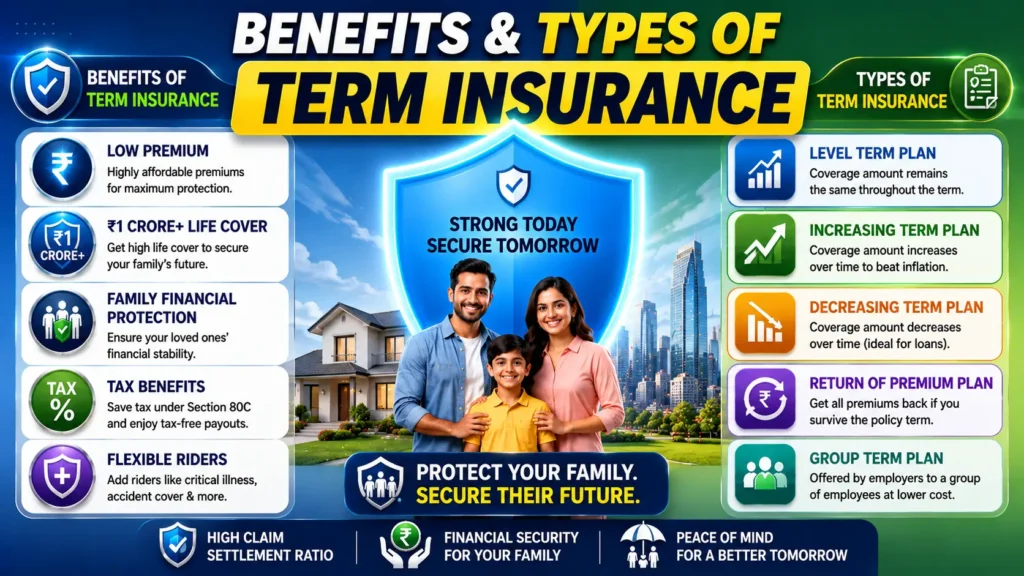
This is the biggest benefit of term insurance. For a small monthly amount, you can get a huge cover, sometimes 1 crore or more. This means your family financial protection stays strong even if you are not around. If you have a home loan, kids’ education to plan, or parents depending on you, this becomes even more important.
Pure Life Insurance Plan With No Confusion
Since term insurance is a pure life insurance plan, there is no mixing of insurance and investment. This makes it easy to understand, and honestly, easier for your family to claim as well. If you think as I do, mixing insurance with investment often confuses people and reduces the actual protection amount.
Tax Benefits
Premiums paid for term insurance are eligible for tax deduction under Section 80C (up to the applicable limit), and the payout your family receives is usually tax-free under Section 10(10D). It also gives you an extra benefit along with protection.
Flexible Coverage Options
You can choose how much cover you need, and for how long. Many plans also allow riders like critical illness cover, accidental death benefit, and disability cover, so you can customise your protection.
Riders Make Your Plan Stronger
One more thing worth mentioning in this Term Insurance Explained section is riders. A rider is an add-on benefit you attach to your base policy for a small extra cost. Popular riders include critical illness cover, waiver of premium, and accidental death benefit. In my experience, adding a critical illness rider is a smart move, since it gives you extra support if you are diagnosed with a serious illness, without waiting for a death claim.
Term Insurance vs Life Insurance: What's The Difference?
Friends, this question comes up a lot: term insurance vs life insurance, are they the same thing? Not exactly. Term insurance is actually a type of life insurance, but it’s the simplest and cheapest form.
Other life insurance plans, like whole life or endowment plans, mix protection with savings or investment. This means your premium is higher, but you also get some money back later. Term insurance skips the savings part completely and focuses only on protection.
So when should you pick which? Honestly, if your main goal is to protect your family at a low cost, term insurance wins easily. But if you also want a savings habit built into your policy, and you don’t mind paying more, other life insurance plans might suit you. There is no one-size-fits-all answer here, but for most young earners, term insurance makes more financial sense.
So, in short, whenever someone asks for Term Insurance Explained in one line, I say this: it’s the cheapest way to protect your family’s future, while other life insurance plans mix protection with savings at a higher cost.
Types Of Term Insurance Plans
Now let’s talk about the different types of term insurance plans available today.
- Level Term Plan: Coverage amount stays the same throughout the policy term. This is the most common and simple type.
- Increasing Term Plan: Coverage amount increases over time, useful if you expect your responsibilities to grow.
- Decreasing Term Plan: Coverage reduces over time, often used to match a reducing loan balance like a home loan.
- Return of Premium Plan: You get your paid premiums back if you survive the term, but the premium cost is higher.
- Group Term Plan: Offered by employers to a group of employees, usually at lower cost but with limited coverage.
Understanding these types is a key part of getting Term Insurance Explained properly, because the right type depends completely on your personal situation, not just what an agent recommends to you.
How To Choose The Best Term Insurance Plan
This is where most people get stuck, so let’s simplify it together.
Decide Your Coverage Amount
A common rule is to choose coverage that is at least 10 to 15 times your yearly income. But friends, also add your outstanding loans and future goals like your child’s education while calculating this.
Check The Claim Settlement Ratio
Always check the insurer’s claim settlement ratio before buying a policy. A higher ratio means the company has a good track record of actually paying claims to families. This one factor can save your family from unnecessary stress later.
Compare Online Term Insurance Plans
Online term insurance plans are often more affordable than offline plans because insurance companies don’t have to pay agent commissions. So now let’s talk about comparing plans online; it’s simple, quick, and you can check premiums from multiple companies within minutes.
Choose The Right Policy Term
Ideally, your term insurance should cover you till your retirement age or till your major financial responsibilities are over, like your home loan or your child’s higher education.
Be Honest In Your Application
Tell me the truth, friends; please don’t hide your health details or smoking habits while buying term insurance. If you hide facts, your family’s claim could get rejected later, and that defeats the entire purpose of buying the plan.
Common Mistakes To Avoid When Buying Term Insurance
- Choosing coverage that is too low compared to your income and responsibilities.
- Ignoring the claim settlement ratio while comparing plans.
- Hiding medical history or lifestyle habits like smoking.
- Delaying the purchase, since premiums increase with age.
- Not reviewing the policy when your income or family situation changes.
Is Term Insurance Worth Buying In India?
Honestly, yes. In my experience, term insurance is one of the most practical financial products available today. It’s affordable, simple, and gives real family financial protection. However, it’s not an investment tool, so please don’t expect returns from it. If your main goal is financial protection, this is a good choice to buy.
Let me share a small personal story here. A close friend of mine kept delaying his term insurance purchase for almost three years, thinking he was too young to need it. When he finally sat down for a proper Term Insurance Explained conversation with me, he realised his premium had already gone up simply because he was older. The lesson here, friends, is simple: don’t wait. The earlier you buy, the cheaper your premium stays for the entire policy term.
Final Thoughts
So friends, that was my honest and simple Term Insurance Explained guide for you. We covered what term insurance is, how it works, its benefits, types, and how to choose the best plan for your family. If you think like I do, protecting your family should always come before chasing returns. Take your time, compare a few good online term insurance plans, check the claim settlement ratio, and buy your policy early while premiums are still low.
Disclaimer
This article is shared only to provide general information. It is not financial or insurance advice. Please talk to a qualified financial or insurance expert before making any decisions Please read policy documents carefully and consult a certified financial advisor before buying any term insurance plan.
FAQ's
What is term insurance and how does it work?
Term insurance is a simple life cover plan. You pay a small premium, and if you pass away during the policy term, your family gets a large payout.
Is term insurance better than whole life insurance?
For pure protection at a low cost, term insurance is usually better. Whole life plans cost more but add a savings or return element too.
How much term insurance coverage do I need?
A general rule is 10 to 15 times your yearly income, plus your loans and future goals like children’s education or marriage expenses.
Can I buy term insurance online?
Yes, online term insurance plans are easy to buy, usually cheaper than offline ones, and let you compare multiple insurers within minutes.
Do I get money back if I survive the term insurance policy?
In a regular term plan, no. Only return-of-premium plans give your money back, but they come with a higher premium cost.
What happens if I stop paying my term insurance premium?
Your policy lapses after the grace period ends, and your family will not get any payout if the policy is not active anymore.