
Friends, I have to tell you something scary. Last year, Indians lost roughly ₹22,000 crore in online fraud. That’s not a small number. The worst part? Most of these scams could have been prevented with a little caution. That’s why Online Banking Safety Tips are so important even in 2026.
I know what you’re thinking: ‘I’m careful, I won’t fall for any scam.’ Well, I thought the same until my own cousin lost almost ₹40,000 in a fake customer care call. He’s a smart guy, works in IT, and yet he still got caught in the scam. So, be honest, are you 100% sure you know every trick these scammers are up to nowadays?
In this article, we will talk about real, practical Online Banking Safety Tips that will actually work for everyone in 2026. No pointless theories, no scary jargon. Just simple, easy-to-understand words. We will cover UPI frauds, fake calls, phishing links, mobile banking Safety, and much more. By the end, after learning how to keep your hard-earned money safe, you will feel much more confident.
In This Article
ToggleHighlight key
- UPI collect request scams and fake refund tricks are the most common frauds in India right now
- Never share your OTP, PIN, or CVV with anyone, not even someone claiming to be from your bank.
- Two-factor authentication is one of the strongest online banking safety tips you can use today.
- Digital arrests and deepfake voice call scams are part of the new and dangerous fraud trends in 2026
- Screen sharing apps like AnyDesk and TeamViewer are often misused by scammers.
- Always check for HTTPS and the correct spelling of your bank’s website before logging in.
- Report any fraud within the golden hour by calling 1930 or visiting cybercrime.gov.in
Why Online Banking Safety Tips Matter More Than Ever in 2026
Digital banking has made our lives so easy, no doubt about that. You can pay your electricity bill from your bed, send money to your friend in two seconds, and check your balance without even standing up. But this ease comes with a price. As more people use mobile banking and UPI, more scammers are also trying their luck.
In my experience, most people think fraud only happens to careless people. That is simply not true. Fraudsters today use smart tricks, fake calls that sound official, and messages that look exactly like they came from your bank. They are not lazy criminals anymore; they are organised, and they use technology just like we do.
This is why online banking safety tips are not just for beginners. Even people who have used internet banking for years need to stay updated. Cases of cybercrime jumped from about 10 lakh in 2022 to almost 28 lakh in 2025. This is just a huge surge in fraud cases in just a few years. If you think as I do, this number alone should be enough reason to take your banking security seriously.
The good news is that staying safe does not require you to be a tech expert. You just need to know the common tricks and follow a few simple habits. That is exactly what we will cover in the next sections, one by one, in very simple English.
Common Online Banking Safety You Should Know About
UPI Collect Request and Fake Refund Scam
Digital Arrest Scam
Fake Customer Care Numbers
Phishing Links and Fake Banking Websites
Deepfake Voice and Video Calls
Best Online Banking Safety Tips for Beginners
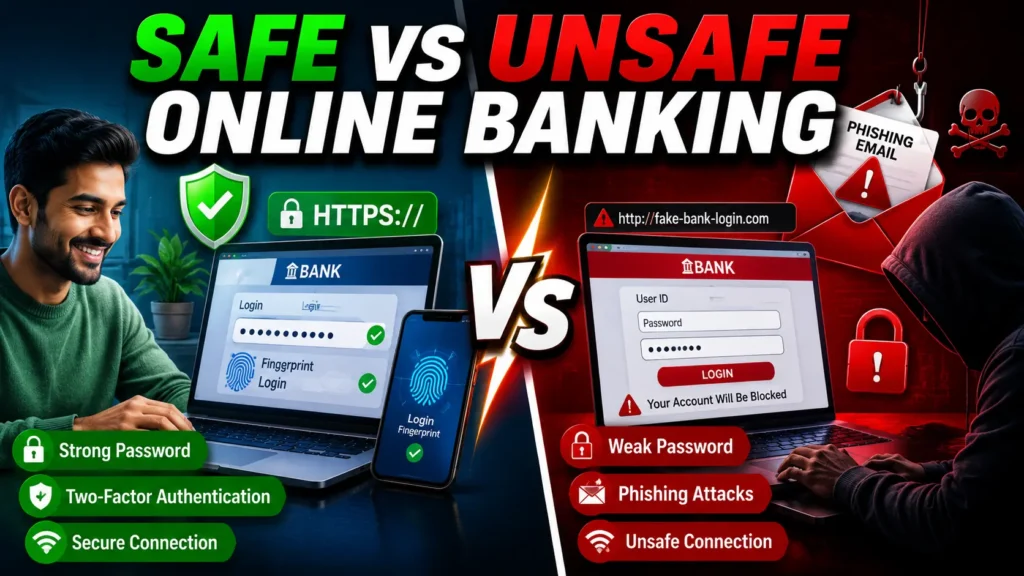
- Always download your bank’s app from the official Play Store or App Store, never from a link sent in a message.
- Set a strong password with a mix of letters, numbers, and symbols, and avoid using your birthday or name.
- Never save your card details on random shopping websites.
- Check your bank statement every week, even if it feels boring.
- Keep your registered mobile number active, since OTPs and alerts come there.
- Avoid using public Wi-Fi for banking transactions.
- Log out properly after every banking session, especially on shared devices.
How to Keep Your Online Banking Account Secure
Now let’s talk about the daily habits that actually protect your money. Online banking security is not a one-time setup; it is something you need to practice regularly.
First, always keep your banking app updated. Banks release updates that fix security holes, and skipping updates leaves you exposed. Second, never click on links sent through SMS or WhatsApp claiming to be from your bank. Real banks almost never send clickable links asking you to “verify” your account urgently.
Third, use biometric login like fingerprint or face unlock wherever available. This adds an extra layer that a scammer cannot easily bypass, even if they know your password. Fourth, avoid using the same password across multiple banking apps. If one gets compromised, the rest stay safe.
Finally, register for SMS and email alerts for every transaction. This way, even if something happens, you will know within seconds and can act quickly. Time really matters in fraud cases, so the faster you notice, the better your chances of recovery.
Two-Factor Authentication for Banking: Your Best Friend
Honestly, if there is one single tip I would ask you to remember from this whole article, it is this: turn on two-factor authentication for banking wherever you can. This means that even if someone gets your password, they still need a second code, usually sent to your phone, to actually log in.
Most Indian banks already have some form of this built in through OTPs. However, you should also check if your bank offers app-based authentication or hardware tokens for extra safety, especially if you handle large transactions regularly. This single step blocks a huge percentage of fraud attempts because scammers usually do not have access to your physical phone.
Now, some people find OTPs annoying and wish banking was faster. I understand that feeling, but trust me, that extra 10 seconds is worth it. In my experience, the people who complain about OTPs the most are usually the ones who have never faced fraud. Once it happens to you or someone close, you start appreciating every extra security layer.
Mobile Banking Security Tips for Android Users
- Only install apps from the Google Play Store; avoid APK files shared through WhatsApp or email.
- Turn off “install from unknown sources” in your phone settings unless you specifically need it.
- Use a screen lock with PIN, pattern, or biometric, not just a swipe
- Install a trusted antivirus app if you frequently browse unknown websites.
- Regularly check app permissions and remove access for apps that do not need banking-related permissions.
How to Identify Fake Banking Websites
This is such an important skill in 2026. Fraudsters create websites that look almost identical to real bank websites, sometimes with just one letter different in the URL. Here is how you can protect yourself.
Always check the website address carefully before entering any details. Look for “https” and a small lock icon in the address bar; this shows the connection is encrypted. However, do not rely on this alone, since even fake sites can have HTTPS now. The real test is checking the exact spelling of the domain name.
Never reach a banking website through a link in an SMS, email, or social media post. Instead, type the address directly into your browser, or better yet, use the official app. If something feels off, like unusual pop-ups asking for extra details, close the page immediately and call your bank through the number printed on your card or passbook.
Safe Internet Banking Practices in 2026
As we move further into 2026, safe internet banking practices have become slightly different from what they were a few years ago. Scammers have become smarter, so our habits need to be smarter too.
Now let’s talk about some updated practices. Use virtual cards for online shopping wherever your bank offers them, since these have limited validity and reduce risk if leaked. Set daily transaction limits on your UPI and net banking, so even if something goes wrong, the damage is limited. Also, review your linked devices regularly; most banking apps show you which devices are logged in, and you should remove any device you do not recognise.
Another practice that is often ignored is checking your credit report once every few months. Sometimes fraud shows up there before you even notice it in your bank statement. Therefore, treat this as a habit, not a one-time task.
Secure Online Transactions: What You Should Always Check
- Make sure to double-check the payment amount before entering your PIN.
- Avoid making payments over a phone call while someone is guiding you.
- Never share your screen with unknown callers, even if they claim to be bank staff.
- Double-check the recipient’s name before confirming a UPI transfer.
- Save receipts or screenshots of important transactions.
Banking Scam Prevention: What to Do If You Already Got Trapped
Sometimes, despite all precautions, things go wrong. If that happens to you, do not panic and do not feel embarrassed. Many victims stay quiet out of shame, and that only helps the scammers.
The moment you realise something is wrong, call your bank immediately and block your card, UPI ID, or net banking access. Time matters a lot here, so do not wait even a few hours. Next, change your passwords for banking apps and linked email accounts. Report the fraud on the national cybercrime portal, cybercrime.gov.in, or call the helpline number 1930 as soon as possible.
This “golden hour” reporting can actually help freeze the fraudster’s account before the money moves further away. Banks and cyber cells work together to trace and sometimes recover funds, but only if you report quickly. So friend, if something like this ever happens to you, instead of sitting and worrying, get to work as quickly as possible.
Online Banking Privacy: Protecting Your Personal Information
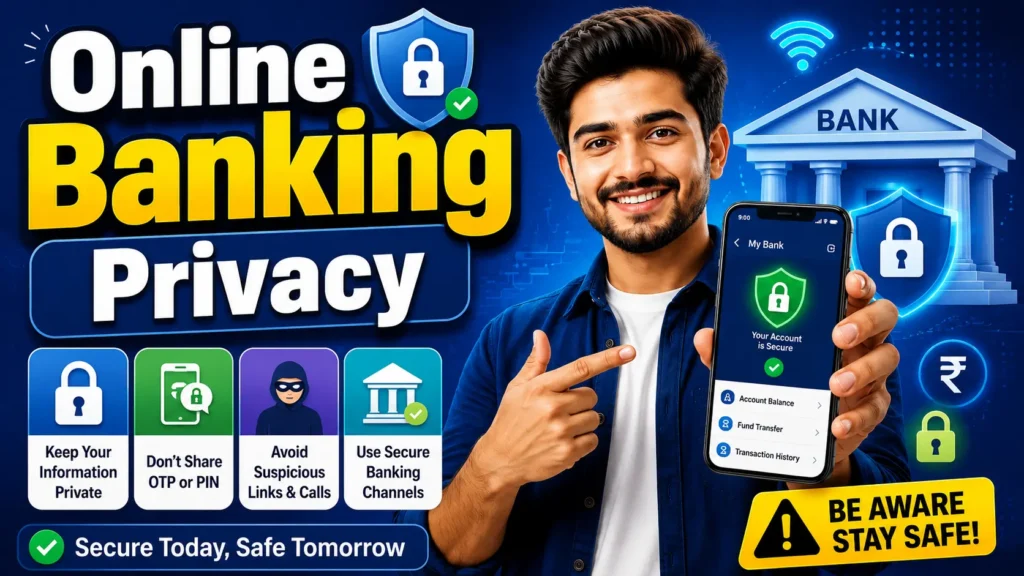
Common Online Banking Mistakes to Avoid
- Sharing OTP with anyone, even someone claiming to be bank staff
- Clicking links in urgent-sounding messages without checking the sender
- Using the same password across multiple financial apps
- Ignoring small unauthorised transactions, thinking they are not important
- Keeping too much money in a savings account linked directly to UPI without limits
- Not updating banking apps regularly.
Final Thoughts:
FAQ's
What are the best online banking safety tips for beginners?
How can I identify a fake banking website?
Is UPI safe for daily online transactions?
What should I do immediately after an online banking fraud?
How does two-factor authentication improve banking security?
Can scammers really clone a voice for banking fraud?
Are screen sharing apps like AnyDesk dangerous for banking?

My name is Subodh Kumar, and I am a finance blogger at Financemantraa.com with a strong interest in personal finance, investing, and financial research spanning 4–5 years.
I enjoy researching financial topics and explaining complex money concepts in simple, easy-to-understand language. My areas of interest include stock market basics, IPOs, mutual funds, financial planning, insurance, saving strategies, and wealth building.
Through Financemantraa.com, I aim to help readers improve their financial knowledge, understand investment concepts, and make informed financial decisions. I focus on creating practical, beginner-friendly guides that make personal finance easier to understand and apply in everyday life.
I believe that financial education and smart money habits can help people work toward long-term financial stability. My goal is to make reliable, accessible, and informative financial content available to everyone.
Disclaimer: The information published on Financemantraa.com is for educational and informational purposes only. It should not be considered professional financial or investment advice.