
Friends, have you ever taken a ₹10 note out of your pocket only to find it torn, soft, or almost falling apart? I’ve noticed this many times. Just last month, a shopkeeper near my house refused to accept my old ₹10 note because it was too worn out.
That little moment made me think about why our notes wear out so quickly compared to other countries. Well, it seems like the RBI is thinking about this too. RBI’s plan for plastic currency notes is now in the news, and it could change the way we handle money in India.
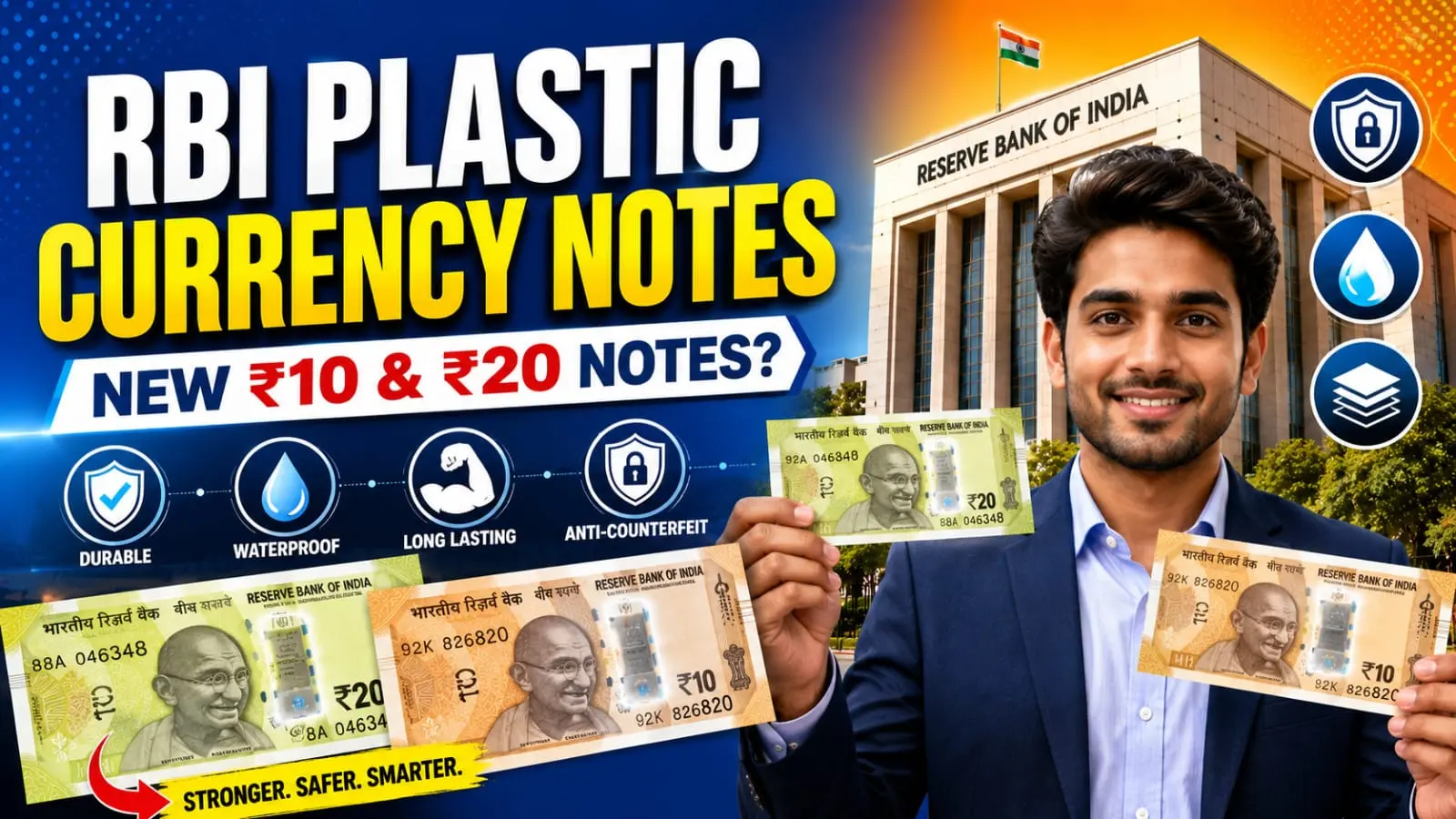
In simple words, the Reserve Bank of India is getting ready to test plastic notes, also known as polymer notes, starting with ₹10 and ₹20. This isn’t just a small update. It might be one of the biggest changes in Indian currency in years. In this article, I’ll explain everything about RBI plastic currency notes in simple words, so even if you’re not into finance news, you can fully get it.
Highlight key
- RBI’s note printing arm BRBNMPL has floated a global tender to buy polymer sheets for trial notes.
- The pilot project will most likely start with ₹10 and ₹20 notes.
- It is believed that plastic notes stay available in the market for two to three times longer than paper notes.
- Paper notes will not vanish suddenly; both paper and polymer notes may run together.
- The move is driven by rising printing costs and a huge number of soiled notes every year.
- Over 60 countries already use polymer currency, including Australia, UK, Canada, and New Zealand.
What Are Plastic Banknotes?
So, what are plastic banknotes exactly? Plastic banknotes, also known as polymer notes, are currency notes made from a thin, flexible plastic material instead of the usual cotton-based paper. This plastic is called a security-grade polymer substrate. It feels a bit smoother and shinier than a normal note, and it is much harder to tear.
Tell me the truth: most of us think a note is a note- paper or plastic; does it really matter? Actually, yes, it matters a lot. Paper notes soak up sweat, dirt, and moisture every single day.
They fold, crumple, and tear easily. Plastic notes handle all of this much better. That is exactly why RBI Plastic Currency Notes are being discussed now, because our current paper notes simply do not survive long in India’s heat, humidity, and heavy daily use.
Plastic Notes are already common in many countries, and honestly, once you use one, you can feel the difference. It feels stronger in the hand, almost like a laminated card rather than soft paper.
RBI's Big Announcement: Why Plastic Notes Now
RBI’s note printing subsidiary, called Bharatiya Reserve Bank Note Mudran Private Limited, or BRBNMPL, has floated a global tender for polymer sheets.
This tender is asking for a huge quantity of biaxially oriented polypropylene-based polymer substrate, which is just a fancy way of saying strong, security-fitted plastic sheets. This tender is meant for trial production of currency notes, and it is a clear signal that RBI Plastic Currency Notes are moving from idea to action.
Now let’s talk about why this is happening at this very moment. In my experience covering finance-related updates, big changes like this rarely happen without a strong reason, and this one has two clear reasons.
First, the cost of printing paper notes has gone up sharply. Money spent on printing notes rose to around ₹6,372.8 crore in one recent year, up from about ₹5,101.4 crore the year before. That is a big jump, and RBI wants to control this rising cost.
Second, a massive number of notes get too dirty or damaged to use every year.
Close to 23.8 billion pieces of soiled notes were thrown out in one year alone, a rise of over 12 percent compared to the year before. Most of these were ₹500 and ₹100 notes, but lower value notes like ₹10 and ₹20 also wear out fast because they change hands so often, at the tea stall, at the local bus stand, everywhere.
This issue was also discussed at RBI Board meetings, showing that this is a serious, well-thought-out plan and not just a rumor.
Plastic Banknotes vs Paper Banknotes
Durability
Water Resistance
Security Features
Benefits of Plastic Banknotes
Let’s be fair and list out the real Benefits of Plastic Banknotes, without any hype:
- They last longer, so the RBI spends less money reprinting notes again and again.
- They resist water, dirt, and general wear, so notes stay cleaner and more usable.
- They are harder to fake, thanks to modern security features built right into the plastic.
- They are cheaper in the long run, even though the upfront printing cost is higher.
- They take up less space when new, since they are thinner and more compact.
Any Downsides? Let's Be Honest
Now, I promised to be genuine, so let’s talk about the downside too. Plastic notes are not perfect.
- The upfront cost of setting up polymer printing is high, since India needs new machines, new ink, and a whole new supply chain.
- Some people find plastic notes a bit slippery to count, especially bank staff used to paper texture for years.
- In hot weather, some polymer notes can stick together if not designed properly.
- Switching an entire currency system takes years, not months, so do not expect paper notes to disappear anytime soon.
Which Countries Use Polymer Banknotes?
If you are curious which countries use plastic banknotes already, the list is longer than you might think. Australia started it in 1988, and soon after, countries like New Zealand, Canada, the United Kingdom, and Romania followed. Today, over 60 countries print at least some of their currency using polymer.
This shows that Modern Banknotes made of plastic are not an experiment anymore; they are a well-established global standard. India is honestly a bit late to this trend, but better late than never.
How Plastic Banknotes Are Made
You might wonder how plastic banknotes are made in the first place. It starts with a special plastic film, usually a polypropylene-based material. This film goes through several layers of coating to make it opaque, so it looks and feels like a normal note instead of a clear plastic sheet.
After that, security features like transparent windows, tiny patterns, and special inks are added during printing. The final sheets are then cut into individual notes. Compared to paper notes, this process uses fewer natural resources like cotton and water, which is actually a small environmental plus point too.
Are Plastic Banknotes Recyclable?
This is a fair and important question: are plastic banknotes recyclable? The good news is, in most countries that already use polymer currency, old and damaged notes are collected and melted down to be reused for other plastic products, like pipes or compost bins. This is actually smarter than how paper notes are handled, since old paper notes usually get shredded and disposed of without much reuse value.
So when it comes to the environmental impact of Plastic Banknotes, the picture is actually more positive than people assume, as long as proper recycling systems are set up alongside the new currency.
How to Identify Genuine Plastic Banknotes
Once Plastic Notes are rolled out in India, knowing how to identify genuine plastic banknotes will be important for all of us. Usually, you can check for a clear see-through window with a printed design inside it, a feature that is very tough to copy on fake notes.
The texture also feels smoother and slightly stiffer compared to paper. Tiny raised print and sharp, clean color edges are other signs of a real note.
In my experience with other countries’ currency, once you handle a genuine polymer note even once, spotting a fake one later becomes much easier.
Future of Banknotes in India
So, what does the Future of Banknotes look like in India? Based on everything RBI has shared so far, the plan is slow and careful, not a sudden overnight switch. The pilot will start small, likely with ₹10 and ₹20 notes, in select cities.
If this trial goes well, RBI may slowly expand the use of polymer notes to more denominations over the coming years. As of now, India has over 17,000 crore currency notes in circulation, worth around ₹41 lakh crore. Replacing even a part of this huge system will take real planning and time.
So, friends, do not expect your wallet to be full of plastic notes next month. This is a long term-shift, and RBI seems to be taking it seriously and slowly, which is honestly the right way to do it.
Final Thoughts
Plastic currency notes from the Reserve Bank of India (RBI) are a smart and practical step for India. Our notes go through tough conditions every day, like sweat, rain, dust, and constant handling from one person to another, and paper can’t last long under all that.
Plastic and polymer currency offer better durability, stronger security, and lower costs over the long term, even if it takes a few years to adjust at first.
I really feel that paying attention to this update is a smart thing to do, especially if you are a shop owner, handle cash cases daily, or just like to stay updated on money-related news. Keep an eye on official RBI updates, because plastic notes could soon become a normal part of your daily life.