

Introduction:
Hey Friends, if you follow money news as I do, you must have seen this week’s headlines. ‘India Forex Reserves Down’ is trending everywhere right now, and honestly, I noticed it too. The Reserve Bank of India has just released fresh numbers, and there’s been a significant dip in both foreign currency assets and gold reserves.
Now, I know that numbers like these can sound boring at first to most people. But seriously, don’t you want to know what this really means for your money, your travel plans, or your investments in gold jewelry? Let’s break it down in the simplest way, just like I’d chat with a friend over tea.
Highlight key
- India’s total forex reserves dropped by $5.654 billion in the week ended June 26, 2026, reaching $666.933 billion.
- The previous week had actually seen a small rise, so this fall came as a bit of a surprise to many.
- Gold reserves have been swinging up and down sharply over the past two months due to global gold price changes.
- RBI officials have clarified more than once that the country has not sold off its physical gold stock
- Reserves are still way above the danger zone and can cover many months of India’s import bill.
- The rupee has been under pressure this year, and the RBI has been actively selling dollars to protect it.
Why Are India's Forex Reserves Down Right Now?
So here is the real question everyone is asking. Why exactly are India’s forex reserves down at this point in 2026? In my experience following financial news, there are usually two or three reasons working together, not just one.
First, the RBI has been actively intervening in the currency market. When the rupee weakens too much against the dollar, the central bank sells dollars from its reserves to support the currency. This directly reduces the reserve number. And 2026 has been a tough year for the rupee, especially after tensions in West Asia pushed oil prices higher, which always puts pressure on India’s currency because we import so much crude oil.
Second, gold prices in the global market have been jumping around a lot. Since a big chunk of India’s reserves is held in gold, any dip in international gold prices shows up as a lower reserve value, even if the RBI has not sold a single gram of gold. This is something people often get confused about, so let me explain it clearly below.
Third, there are smaller technical factors like changes in Special Drawing Rights (SDRs) with the IMF and India’s reserve position with the fund. These are usually small amounts compared to the big picture, but they do add or subtract from the final total.
The Latest RBI Numbers You Should Know
Now let’s talk numbers, because that’s what everyone actually wants to see.
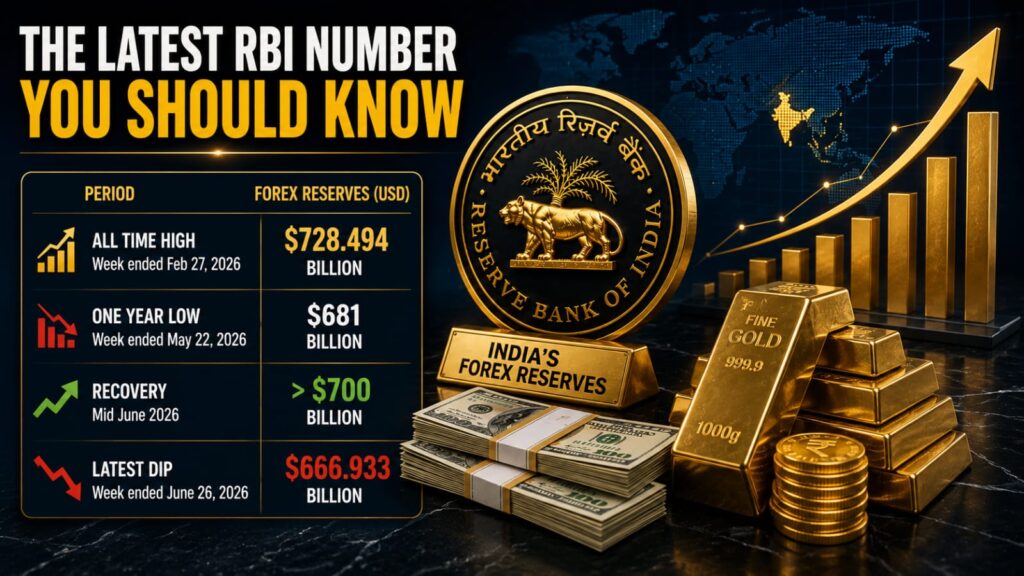
For the week ended June 26, 2026, India’s forex reserves fell by $5.654 billion to reach $666.933 billion. Just one week before that, on June 19, reserves had actually gone up by $963 million to $672.587 billion. So this is not a one-direction slide, buddy. It has been going up and down like a rollercoaster for months now.
If you think as I do, you would want the full picture, not just one week. So here it is:
- All-time high: around $728.494 billion in the week ended February 27, 2026
- One-year low: around $681 billion in the week ended May 22, 2026
- Recovery: back above $700 billion by mid June 2026
- Latest dip: down to $666.933 billion by June 26, 2026
What Happened to India's Gold Reserves?
This part is honestly the most interesting bit, and also the most misunderstood. Earlier in June 2026, gold reserves within India’s total forex kitty saw a very sharp valuation drop, falling by over $10 billion in just one week due to gold price changes. This sparked a lot of speculation online, with some reports even suggesting the RBI had sold gold worth billions of dollars.
However, the RBI and government fact-checkers came out and clearly denied this. According to official statements, India’s physical gold holding remained steady at around 880 tonnes, and gold’s actual share within the total reserves had been rising over the past year, not falling.
RBI Governor Sanjay Malhotra personally addressed this and said the changes were due to gold price movement in the international market, not any sale of physical gold.
In my experience, this is a classic case where the headline number scares people, but the real story underneath is much calmer. Gold prices go up and down daily in the world market. Since RBI values its gold holdings at current market rates, the dollar value of gold reserves will naturally shift week to week, even without a single transaction happening.
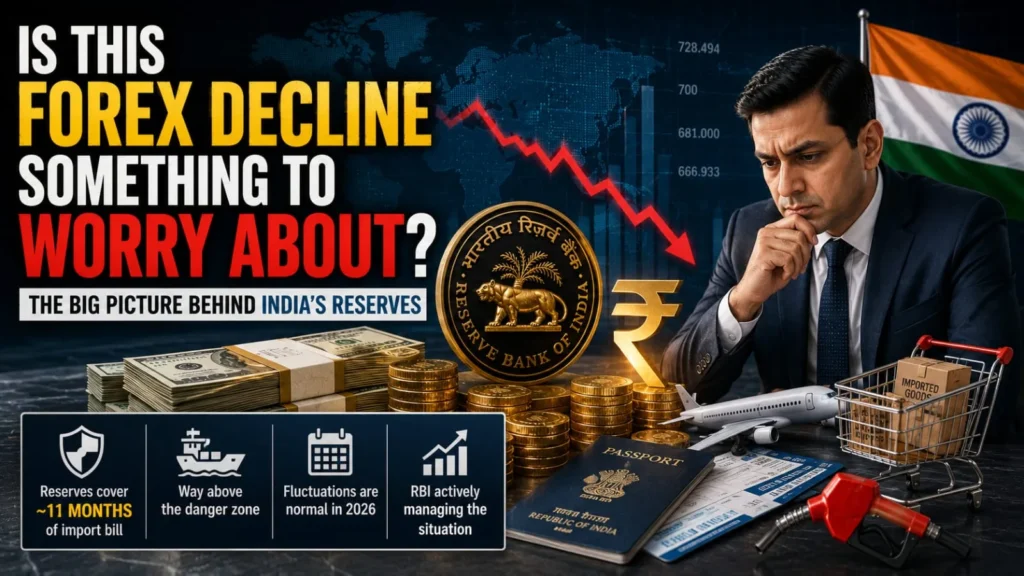
Is This Forex Decline Something to Worry About?
Tell me the truth, this is probably the question on your mind right now. Should you be worried about India Forex Reserves Down as a headline?
Honestly, buddy, not really, at least not yet. Here is why I say this.
India’s reserves can still cover close to 11 months of the country’s total import bill, which experts consider very comfortable.
The 1991 crisis, which is often mentioned in comparison, happened when reserves could barely cover 2 to 3 weeks of imports. We are nowhere close to that kind of situation.
Reserves have shown a pattern of falling and recovering multiple times in 2026 alone, which shows the RBI is actively managing the situation rather than losing control.
That said, if you think as I do, you also cannot ignore the pressure points. The rupee has been trading near 94 against the dollar, which is on the weaker side. Global oil prices remain a concern, and foreign investors have pulled money out of Indian markets at certain points this year. These are real challenges that the RBI and government need to keep watching closely.
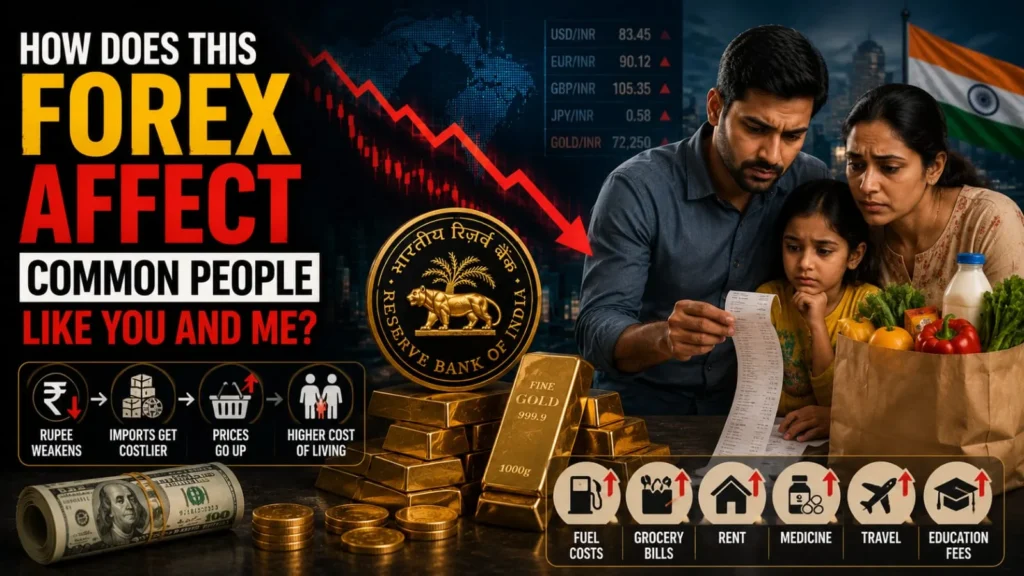
How Does This Affect Common People Like You and Me?
Now here is where I want to bring in a personal angle. A few months back, I was planning to book flight tickets for a family trip abroad, and I noticed the exchange rate had become less favorable compared to earlier in the year.
That is a direct, real-life example of how forex reserve pressure and rupee weakness can touch your daily life, even if you never read RBI reports.
When forex reserves fall and the rupee weakens, here is what usually happens:
- Foreign travel becomes more expensive because you get fewer dollars for your rupees.
- Imported goods, including electronics and certain food items, can become costlier.
- Petrol and diesel prices may face upward pressure since India imports most of its crude oil.
- On the positive side, IT companies and export businesses that earn in dollars actually benefit from a weaker rupee.
So it’s not all bad news for everyone. It really depends on which side of the transaction you are on.
What Is the Government Doing About It?
My Honest Take on India Forex Reserves Down
If you ask me directly, here is my honest opinion. This current dip is more of a short-term fluctuation than a long-term red flag. In my experience tracking these numbers over the years, forex reserves rarely move in a straight line. They react to oil prices, global interest rates, gold prices, and investor sentiment almost every single week.
What I do think is worth watching closely over the next few months is the rupee’s exchange rate and global oil price trends. If both stay under control, I genuinely believe reserves will stabilize and possibly climb back up again, just like they did in June after the May dip.