
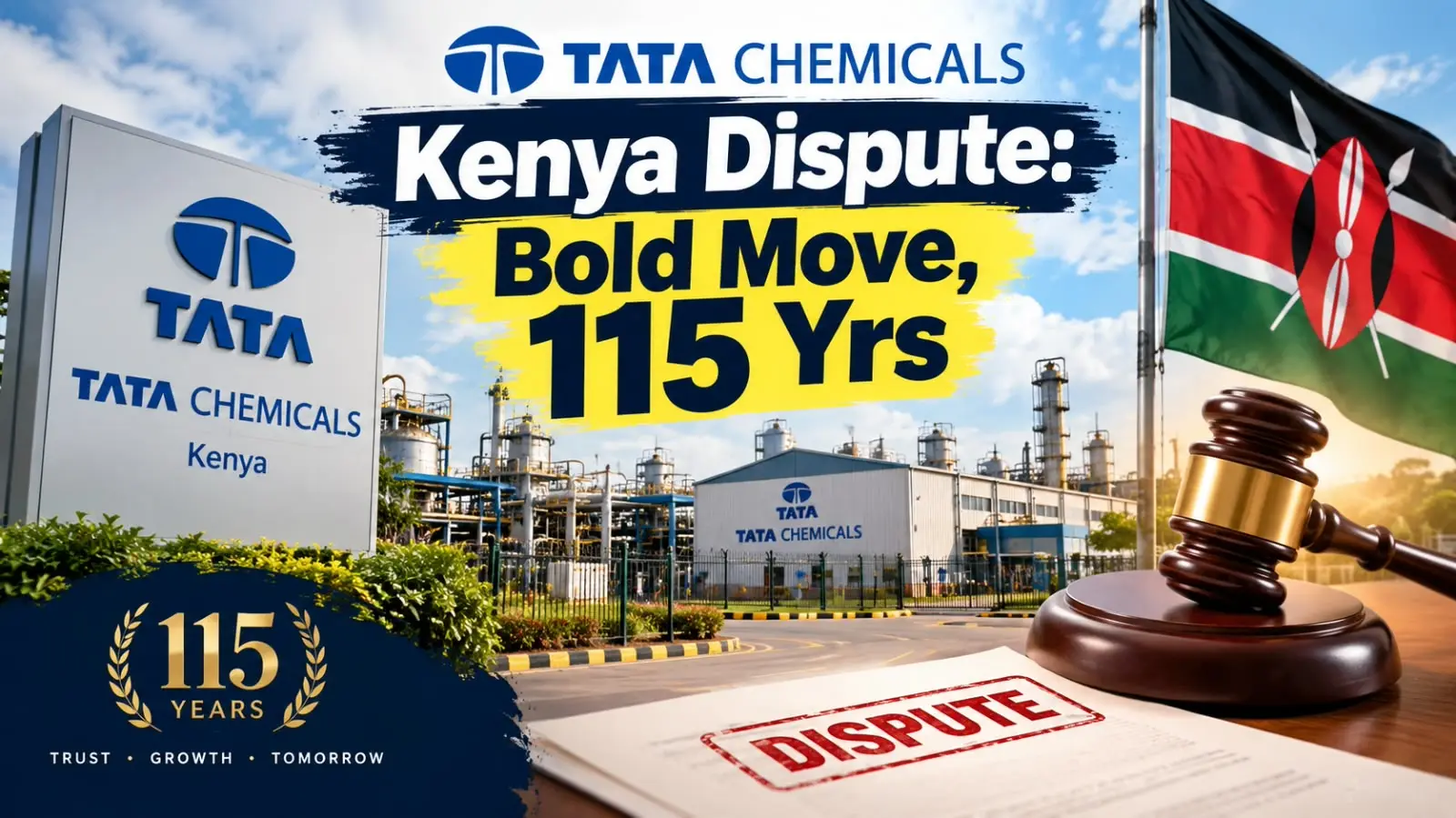
Bro, this is really an eye-opener. The Tata Chemicals Kenya controversy has been in the headlines quite a lot recently, and it involves a company that has been operating in Kenya for the past century. Yes, you read that absolutely right: for more than 100 years. And now suddenly, Kenya’s own president is telling this Indian company to pack up and leave.
I have mostly read about the Tata Group in the context of cars, steel, and tea. So when I first saw this news that Tata Chemicals is in trouble in Africa, I became quite curious and decided to understand it in depth. Let’s understand the Tata Chemicals Kenya Dispute in simple words, without any complicated jargon.
Quick Highlights
- Location: Lake Magadi, Kajiado County, Kenya
- Company Involved: Tata Chemicals Magadi Limited, a unit of India’s Tata Group
- Duration of Operations: Around 115 years at the site
- Suspension Date: July 28, 2026, by Kenya’s Ministry of Mining
- Main Accusations: Unpaid royalties, weak local hiring, no local processing units, poor community benefits
- Tata’s Response: Claims full regulatory compliance and has submitted all required documents
- Court Hearing: Scheduled for October 6, 2026
What Exactly Happened at Lake Magadi?
Now let’s talk about the actual event, because the news around this can feel messy if you don’t know the background. Lake Magadi sits in the Rift Valley and holds one of the purest natural deposits of trona in the world. Trona is basically the raw material used to make soda ash, which is a key ingredient in glass, detergents, and even electric vehicle batteries.
Tata Chemicals Magadi has been mining this trona since 1911, making it one of Kenya’s oldest foreign-run operations. However, on July 28, 2026, Kenya’s Ministry of Mining suspended the company’s mining operations and exports while conducting a compliance review.
Tell me the truth: doesn’t it sound strange that a company running smoothly for over a century suddenly gets a shutdown order overnight? However, once you look at the details, the picture becomes a bit clearer.
Why Did Kenya Ask Tata Chemicals to Leave?
This is the big question everyone is Googling right now. President William Ruto did not hold back his words. He publicly stated that Tata Chemicals had extracted the region’s minerals for decades without giving enough back to the local community.
Let’s break this down into the actual reasons given by the government.
Unpaid Royalties and Land Rates
According to government officials, Tata has been involved in a long-running dispute with Kajiado County over unpaid land rates and mineral royalties worth billions of Kenyan shillings. This is not a new issue, and reports suggest this fight has been going on for years in courts.
Lack of Local Processing and Value Addition
Ruto specifically pointed out that Tata has been exporting raw soda ash instead of building local factories for glass making or chemical processing inside Kenya. In his view, this means Kenya is losing out on jobs and industrial growth that could come from processing the material locally.
Weak Local Hiring and Procurement
The Ministry also accused the company of not hiring enough Kenyan workers and not sourcing enough supplies from local businesses. However, it is worth noting that these are allegations made by the government, and they have not yet been confirmed by any court ruling.
Community Development Concerns
The government claimed Tata failed to properly implement its Community Development Agreements, which are meant to support local infrastructure and welfare projects in the area around the mine.
Is This the Full Picture? What Tata Chemicals Has to Say
In my experience, whenever there is a dispute like this, there are always two sides to the story. So let’s look at what Tata Chemicals actually said in response.
The company issued an official statement saying that its Kenyan subsidiary, TCML, is fully compliant with all regulatory requirements. It confirmed that on August 11, 2026, it submitted all the documentation requested by the ministry and is now waiting for the government’s review.
Here is something interesting, though. Local reports mention that Tata’s operations actually support four schools, run a hospital, and supply fresh water to the town of Magadi. The company also operates a private railway line that provides free water access points for cattle herders along a long stretch of track, and even runs a passenger train service at a very low fare for the local community.
So honestly, this is not a case where the company has done absolutely nothing for the area. However, the government feels that after 115 years of operations, the benefits should have been much bigger, especially in terms of local jobs and industrial development.
The Community Is Divided, and That Says a Lot
If you think as I do, the real ground reality often comes from the people living there, not just from politicians or company statements. And in this case, the local community around Lake Magadi is genuinely split.
Some local leaders support Ruto’s decision, arguing that residents are legally entitled to a fair share of royalties and benefits from resources extracted from their own land. On the other hand, some community mobilizers are worried that if Tata leaves suddenly, essential services like clean water supply could get disrupted for the entire town.
This tells us something important, buddy. This Tata Chemicals Kenya dispute is not simply a political drama. It directly affects real people who depend on the company for jobs, water, healthcare, and even school funding.
Politics Behind the Tata Chemicals Kenya Dispute
Now let’s talk about the part that makes this story even more complicated. Opposition politicians in Kenya have accused Ruto’s government of using this land dispute as a cover story for something bigger. According to these claims, there could be valuable lithium and oil deposits under the Magadi region, and the real motive behind pushing Tata out might be related to controlling these resources.
There have also been serious allegations from opposition leaders claiming that a bribe was demanded from Tata Chemicals, though the government has not directly responded to these specific claims. Naturally, Ruto’s administration denies any hidden motive and insists this is purely about fixing an unfair, outdated arrangement.
However, since Tata has already appealed the suspension, and the case is scheduled to be heard in court on October 6, 2026, we will likely get more clarity once the legal process moves forward.
What This Means for Tata Chemicals as a Company
Now let’s zoom out a bit and look at the bigger business picture. Tata Chemicals is a major global player, running 17 manufacturing facilities and 3 research centers across four continents. The company reported revenue of over 14,584 crore rupees in the last financial year, so Kenya, while important, is just one part of its global operations.
However, this dispute did create some nervousness among investors. Tata Chemicals shares dropped by nearly 1.84 percent after the news broke, which shows that markets are watching this situation closely. Kenya itself is the world’s fourth-largest producer of natural soda ash, so this dispute also affects Kenya’s own export numbers, since soda ash contributes close to six percent of the country’s total exports.
Good Points and Bad Points of This Dispute
Let’s keep this honest and balanced, just like the actual situation demands.
What Looks Fair About Kenya’s Demand:
- Local communities deserve a fair share of benefits from resources extracted from their own land.
- Building local processing industries could genuinely create more jobs in Kenya.
- Holding foreign companies accountable for royalty payments is a reasonable expectation.
What Raises Concerns:
- Sudden suspension after 115 years feels harsh without a proven court verdict against the company.
- Job losses for over 500 direct employees and thousands of support workers have already happened.
- Allegations of hidden motives around lithium and oil deposits raise questions about the real intention behind this move.
- Disruption of essential services like water supply could hurt the very community the government claims to be protecting.
So honestly, buddy, there are valid points on both sides here. This is not a simple villain versus victim story, and anyone telling you otherwise is probably oversimplifying a genuinely complicated situation.
What Happens Next in the Tata Chemicals Kenya Dispute?
As of now, Tata Chemicals has not fully exited Kenya. The company is still engaged with government agencies, and legal questions around licensing and compliance remain unresolved. Ruto has already announced plans to bring in new investors and open up the Magadi contract to more companies instead of allowing one single operator.
Therefore, the final outcome will likely depend on how the October court hearing goes, along with ongoing negotiations between Tata and Kenyan authorities. We will keep updating this article as fresh developments come in the coming weeks.
Final Thoughts
The Tata Chemicals Kenya dispute is a real reminder that even century-old business relationships can suddenly face shocks from other countries when expectations of sharing local resources change over time. Whether you see it as Kenya standing up for its own resources or as a politically motivated move against a long-term investor, one thing is clear: this story isn’t over yet.
Disclaimer: This article is based on publicly available news reports, government statements, and company disclosures as of September 2026. The dispute between Tata Chemicals and the Kenyan government is an ongoing legal and political matter, and details may change as the situation develops. Readers should refer to official statements from Tata Chemicals and the Kenyan government for the most current information.
FAQ's
Q1. Why did Kenya ask Tata Chemicals to leave Magadi?
Kenya accused Tata Chemicals of unpaid royalties, weak local hiring, lack of local processing units, and poor community benefits after 115 years of mining operations.
Q2. Has Tata Chemicals officially exited Kenya in 2026?
No, Tata Chemicals has not fully exited. The company is contesting the suspension legally, with a court hearing scheduled for October 6, 2026.
Q3. What does Tata Chemicals say about the Kenya dispute?
Tata Chemicals claims full regulatory compliance, stating it submitted all required documentation to Kenya’s Ministry of Mining on August 11, 2026.
Q4. How many jobs were affected by the Tata Chemicals Magadi suspension?
Reports suggest more than 500 direct employees and thousands of support workers lost work after Kenya suspended Tata Chemicals Magadi’s mining operations in July 2026.
Q5. Is there a hidden reason behind the Kenya Tata Chemicals exit order?
Opposition leaders allege the dispute may be linked to lithium and oil deposits near Magadi, though the Kenyan government has not confirmed these claims.