

Friends, have you ever thought about what will happen after you stop working? No salary, no income, but bills still come every month. Scary thought, right? This is exactly why so many people in India are talking about NPS these days. So what is NPS? In simple words, NPS means National Pension System, a plan made by the government to help you save money for your old age.
I still remember when my uncle retired after 30 years of hard work. He had a good job, but he had never planned for retirement. He told me, “I wish someone had explained NPS to me when I was young.” That one line stayed with me, and it is the reason I am writing this article today. If you are confused about what is NPS and how it works, don’t worry. By the end of this article, you will understand everything in simple words.
Highlight key
- NPS means National Pension System, a retirement savings scheme backed by the government.
- Anyone between 18 and 70 years can open an NPS account.
- NPS has two parts, Tier 1 and Tier 2, with different rules.
- You get tax benefits on NPS contributions under different sections.
- NPS gives market-linked returns, which are usually better than fixed schemes.
- You can withdraw only part of the money before 60 years; the rest goes into pension.
What is NPS and How Does it Work
Now let’s talk about the real meaning of NPS. National Pension System is a scheme where you put in a small amount of money regularly, and this money gets invested in the market. The National Pension System is managed by the Pension Fund Regulatory and Development Authority, also called PFRDA.
Here is how NPS investment works in simple steps:
- You open an NPS account with your details.
- You choose a pension fund manager who will invest your money.
- Your money goes into a mix of stocks, government bonds, and corporate bonds.
- The value of your account grows over time based on market performance.
- When you turn 60, you can withdraw a part and use the rest to buy a pension plan.
In my experience, this system works best for people who start early. The sooner you start investing, the better the chance your money has to grow over time. Friends, do not view this as a way to get rich overnight. It is a prudent strategy based on steady, consistent progress to build a secure future.
NPS Account: How to Open One
Opening an NPS account is not difficult at all. You can easily create your National Pension System account online in just a few minutes. Here is what you need:
- PAN card
- Aadhaar card
- Bank account details
- A mobile number linked to Aadhaar for OTP
You can visit the official NPS website or use apps from banks that offer this service. Once you fill the form and upload your documents, your NPS account gets created. Tell me the truth, doesn’t that sound much easier than the long paperwork we imagine for government schemes?
After opening your account, you get a PRAN number, which stands for Permanent Retirement Account Number. This number stays with you for your whole life, no matter how many times you change your job or city.
NPS Tier 1 and Tier 2 Account Explained
Many people get confused between an NPS Tier 1 account and an NPS Tier 2 account. Let me explain in simple words.
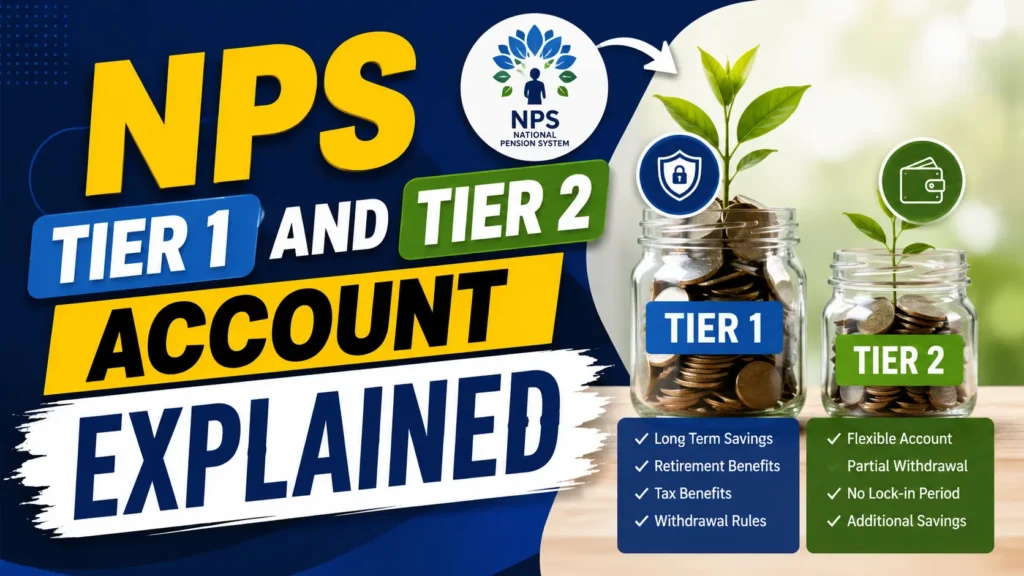
NPS Tier 1 Account
Many people get confused between an NPS Tier 1 account and an NPS Tier 2 account. Let me explain in simple words.
NPS Tier 2 Account
This is more like a savings account. You can add or remove money whenever you want. However, you don’t get the same tax benefits here. You need a Tier 1 account first before you can open a Tier 2 account.
If you think as I do, Tier 1 is for long-term retirement goals, and Tier 2 is for extra savings with some flexibility. Choose based on what you actually need.
NPS Tax Benefits You Should Know
One of the biggest reasons people choose NPS is the tax-saving option. Friends, who doesn’t like saving on tax, right? Here are the NPS tax benefits in simple terms:
- You can claim a deduction up to 1.5 lakh rupees under Section 80C.
- There is an extra deduction of 50,000 rupees under Section 80CCD(1B), only for NPS.
- This extra benefit is not available in most other tax-saving options.
So if you are already using your full 80C limit through other schemes, NPS gives you a chance to save even more tax. This is one honest reason why NPS stands out compared to many other investment options.
NPS Returns and Interest Rate
People often ask, does NPS give fixed interest like a bank fixed deposit? The honest answer is no. NPS returns depend on the market, since your money is invested in stocks and bonds. There is no fixed NPS interest rate.
On average, NPS has given returns between 9% and 12% over the long term, based on the fund manager and the mix you choose. This is usually higher than PPF or fixed deposits, but it also comes with market risk. If the market falls, your NPS value can go down for some time too.
I will say this honestly: if you are someone who gets scared seeing your investment go down, NPS might feel a little uncomfortable in the short term. But over 15 to 20 years, it has shown good growth for most investors.
NPS Withdrawal Rules Explained Simply
NPS withdrawal rules are strict, and this is something you must know before investing. Here is what happens when you reach 60 years:
- You can withdraw up to 60% of your total amount as a lump sum, and this part is tax-free.
- The remaining 40% must be used to buy an annuity, which gives you a monthly pension for life.
What if you need money before 60? Partial withdrawal is allowed only in special cases like higher education, marriage of children, buying a house, or medical treatment. Even then, you can only withdraw a limited percentage, and only after completing 3 years in the scheme.
This rule can feel a bit strict, but it also stops people from spending their retirement money too early. In a way, it protects you from your own future mistakes.
NPS Eligibility: Who Can Invest
NPS eligibility is quite simple and open to almost everyone. You can open an NPS account if:
- You are an Indian citizen, whether living in India or abroad.
- Your age is between 18 and 70 years.
- You have valid KYC documents like PAN and Aadhaar.
Both salaried employees and self-employed people can invest in NPS. Even homemakers and students above 18 years can open an account. This makes NPS one of the most inclusive retirement planning options in India.
NPS vs EPF: Which One is Better
This is a common question, so let’s compare NPS vs EPF honestly.
- EPF is mainly for salaried employees, and NPS is open to everyone.
- EPF gives a fixed interest rate set by the government every year.
- NPS gives market-linked returns, which can be higher but also risky.
- EPF withdrawal is easier compared to strict NPS withdrawal rules.
In my opinion, if you already have EPF through your job, adding NPS on top gives you a good mix of safety and growth. Don’t see it as one versus the other; think of them as partners working together for your retirement.
NPS vs PPF for Retirement Planning
Now let’s talk about NPS vs PPF. PPF, or Public Provident Fund, is a very safe and popular choice, especially among people who don’t like market risk.
- PPF gives fixed interest, currently around 7% to 8%.
- NPS returns are usually higher over the long term, but not guaranteed.
- PPF has a 15-year lock-in, while NPS is locked until age 60 years.
- PPF is fully tax-free on withdrawal; NPS has partial tax rules.
Is NPS better than PPF for retirement? Honestly, it depends on your comfort with risk. If you want guaranteed and safe growth, PPF suits you. If you want higher growth potential and don’t mind some risk, NPS investment makes more sense.
How Much Should You Invest in NPS Every Month
A common question I get from friends is, how much should I invest in NPS every month? There is no fixed answer, but here is a simple way to think about it.
- Start with an amount you are comfortable with; even 1000 rupees a month is fine.
- Try to increase your contribution every year as your income grows.
- The minimum contribution required per year in Tier 1 is just 1000 rupees.
Friends, the goal is consistency, not a huge amount from day one. Even small NPS contribution done regularly can grow into a large amount over 20 to 30 years, thanks to the power of compounding.
Is NPS Safe for Long-Term Investment
Since NPS is regulated by PFRDA, a government body, it follows strict rules and regular checks. This makes NPS a fairly safe option in terms of structure and management. However, safety here does not mean fixed returns. Your money is still exposed to market changes.
If you are looking for a safe and structured retirement scheme with the chance of good growth, NPS is worth considering. But if you cannot handle any risk at all, you may want to balance it with safer options like PPF or fixed deposits.
Final Thoughts
So friends, we have covered what is NPS, how an NPS account works, tax benefits, withdrawal rules, and comparison with EPF and PPF. National Pension System is a solid option for people who want to build a retirement fund with the help of market growth, along with useful tax savings.
Remember my uncle I mentioned earlier? After learning about NPS, he actually recommended it to his own son, my cousin, who started investing right after his first job. Small steps taken early always give better results later. If you haven’t started your retirement planning yet, now is a good time to explore NPS.
FAQ's
What is NPS and how does it work?
NPS, or National Pension System, is a government-backed retirement scheme where your money is invested in market-linked funds to build a pension corpus over time.
What is an NPS Tier 1 and Tier 2 account?
Tier 1 is a locked retirement account with tax benefits, while Tier 2 is a flexible savings account without lock-in but no tax benefits attached.
What are the NPS tax benefits available?
You get a deduction up to 1.5 lakh under Section 80C, plus an extra 50,000 rupees under Section 80CCD(1B), making NPS a strong tax-saving option.
What are the NPS withdrawal rules after retirement?
At 60 years, you can withdraw 60% as a tax-free lump sum, while the remaining 40% must be used to buy an annuity for regular monthly pension income.
Is NPS better than PPF for retirement planning?
NPS usually gives higher long-term returns due to market exposure, while PPF offers fixed and guaranteed returns, so the choice depends on your risk comfort.
Who is eligible to open an NPS account in India?
Any Indian citizen between 18 and 70 years, including salaried, self-employed, and even homemakers, can open an NPS account with a valid PAN and Aadhaar.