
Friends, I want to ask you something, and that too with complete honesty. Have you ever looked at your credit card bill, personal loan EMI, or some old debt taken from a relative and felt like something just dropped in your stomach? This phase came and went in my life a long time ago.
A few years back, I had three small debts on my head at the same time, and every month it felt like I was just moving money around, but there was no real progress to be seen. Then someone told me about the debt snowball method, and honestly, it completely changed the way I look at my money.
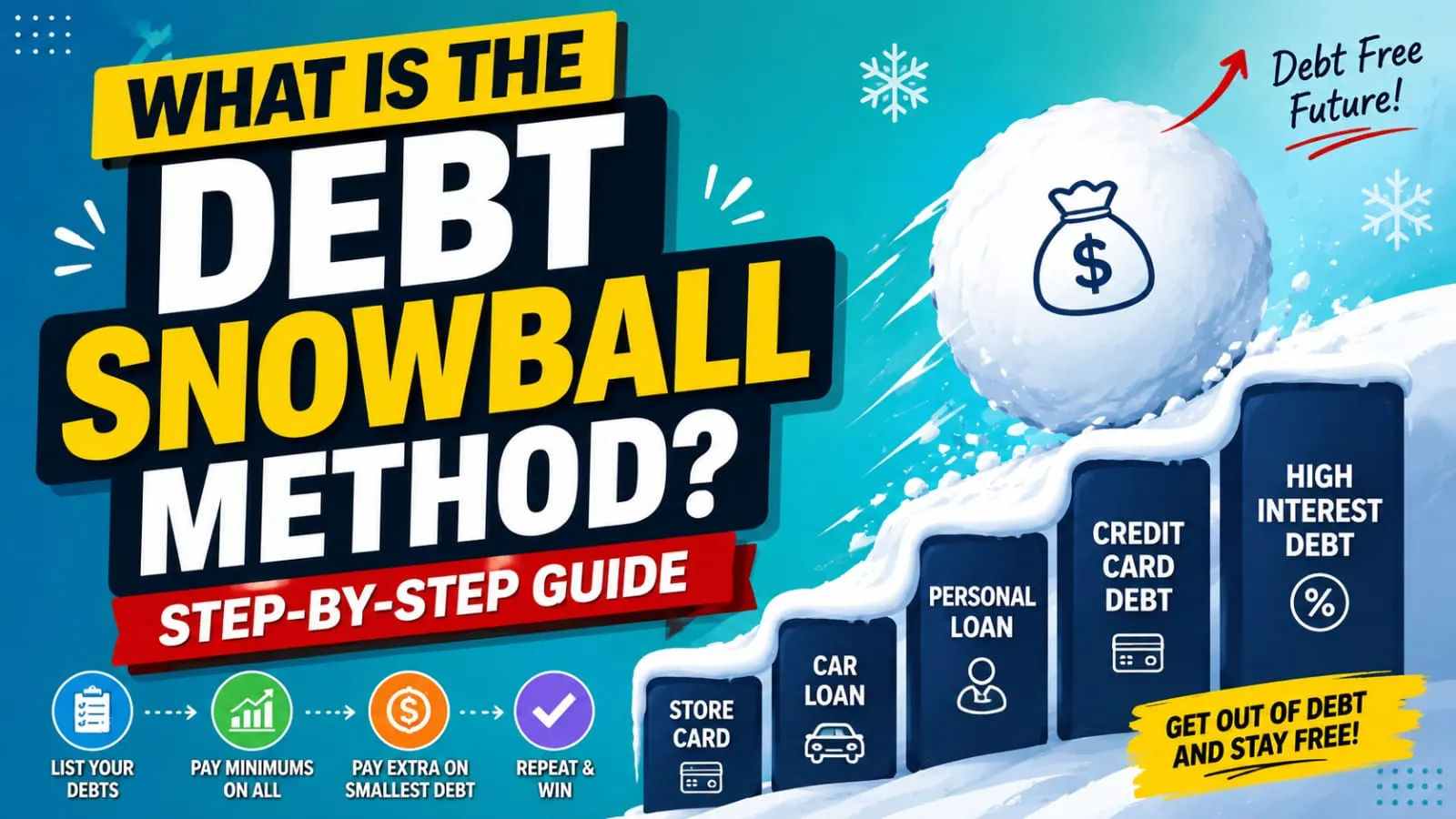
So, what is the debt snowball method? In simple words, it’s a way to pay off your debts one by one, starting with the smallest debt, no matter how much interest you’re paying on it. You make minimum payments on all your other debts, but throw every extra rupee at the smallest debt.
Once that’s gone, you move on to the next smallest debt, and you keep going like this until you’re debt-free. It’s called a ‘snowball’ because, just like a snowball rolling down a hill gathers more snow and gets bigger, your payments also grow and get stronger as each debt is paid off.
In this guide, we’ll explain how the debt snowball works, give a full step-by-step plan, real examples, and honestly where it falls short. Let’s be honest, have you ever tried a method to pay off debt before and quit halfway for some reason? Let’s fix that 100% today.
In This Article
ToggleHighlight key
- The Debt Snowball Method focuses on paying the smallest debt first, then moving to the next.
- It is more about mindset and motivation than pure math or interest savings.
- You keep paying minimums on all debts except the smallest one.
- Small wins early on keep you motivated to stay debt-free.
- It is different from the Debt Avalanche Method, which targets high interest debt first.
- Best suited for people with multiple small debts and low willpower for long-term plans.
What Is the Debt Snowball Method and How Does It Work
The Debt Snowball Method is a debt repayment strategy that was popularized by financial expert Dave Ramsey, though people have used similar ideas for years. The core idea is simple. You list all your debts from the smallest balance to the largest, ignoring the interest rate completely for now.
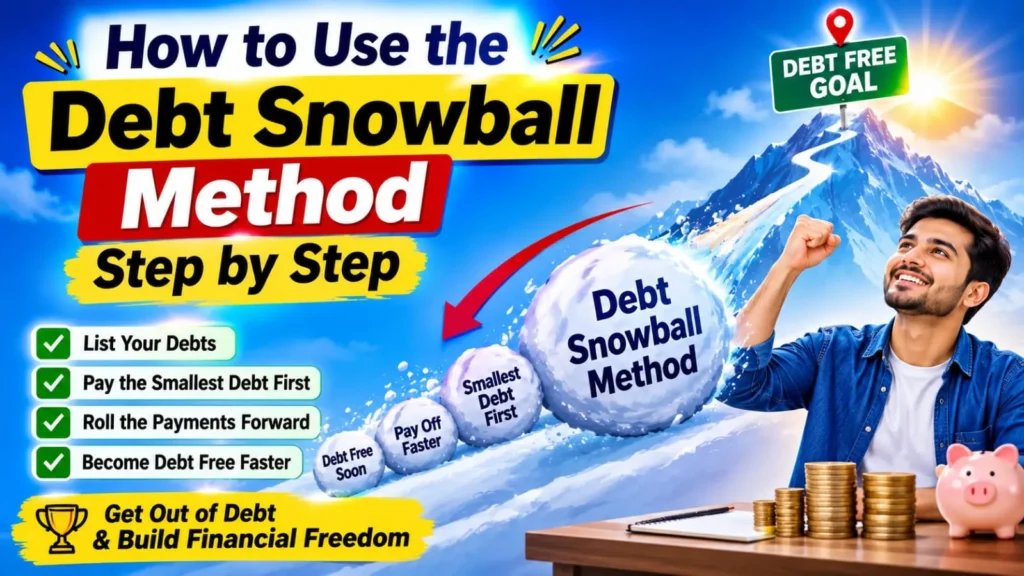
Here is how the debt snowball works in real life. Suppose you have four debts. You keep paying the minimum amount due on every single one of them, without missing a payment. But any extra money you have, maybe from a bonus, savings, or cutting down expenses, goes fully towards the smallest debt. Once that smallest one is paid off completely, you take the amount you were paying on it and add it to the minimum payment of the next smallest debt.
This way, your payment amount keeps growing bigger, like a snowball rolling downhill. In my experience, this method works so well because it gives you quick, visible wins. Clearing even one small loan in two or three months feels amazing, and that feeling keeps you going. Many people who try the debt snowball strategy say the biggest benefit is not the money; it is the confidence.
How the debt snowball works to pay off debt
Now let us talk about the actual steps. If you think as I do, you probably want a clear plan and not just theory. So here is how to create a Debt Snowball plan that actually works for you.
Step 1: List all your debts. Write down every single debt you have: credit cards, personal loans, borrowed money from family, everything. Note the total balance for each one.
Step 2: Arrange them from smallest to largest. Do not look at the interest rate here. Just arrange by the amount owed, smallest at the top.
Step 3: Pay minimums on everything except the smallest. This keeps your credit score safe and stops any late payment charges.
Step 4: Attack the smallest debt with extra money. Whatever extra cash you have, throw it fully at debt number one on your list.
Step 5: Repeat and roll over. Once debt one is cleared, take that full payment amount and add it to the minimum of debt two. Keep repeating this process.
Step 6: Celebrate small wins. Friends, this step matters more than people think. Treat yourself in a small, cheap way when you clear a debt. It keeps the journey enjoyable instead of feeling like punishment.
Debt Snowball Method Example for Beginners
Let us make this practical with numbers, because theory alone does not always click.
Suppose you have these debts:
- Credit card A: Rs 15,000
- Personal loan: Rs 60,000
- Credit card B: Rs 25,000
- Family loan: Rs 1,00,000
Using the Debt Snowball Method, you would first attack the Rs 15,000 credit card while paying minimums on the rest. Once that is done, you move to the Rs 25,000 credit card, then the Rs 60,000 personal loan, and finally the biggest one, the family loan.
Now, therefore, some people ask, why not pay off the family loan first since it is the biggest? Well, because clearing four smaller wins along the way keeps your motivation high. Paying off one huge debt alone, without any progress shown in between, can feel discouraging and slow.
Debt Snowball Method vs Debt Avalanche Method
This comparison comes up a lot, so let us clear it up honestly.
The Debt Avalanche Method asks you to pay off the debt with the highest interest rate first, regardless of the balance size. According to the calculation, in the long run, this method can save you more on interest.
The Debt Snowball Method, however, focuses on the smallest balance first, ignoring interest completely.
Here is the honest truth. If you are purely a numbers person, avalanche will save you more money. But if you are someone who needs motivation and quick results to stay consistent, like most of us honestly are, the snowball method usually wins because it keeps you emotionally invested in the process.
Is the Debt Snowball Method Effective
Yes, and here is why. Multiple studies and real user experiences show that people are more likely to stick with a debt payoff method when they see fast progress. The Debt Snowball Method gives you that instant feedback loop.
However, I will be honest with you: it is not a perfect method. If your smallest debt has a very low interest rate and your biggest debt has a shockingly high interest rate, you might end up paying slightly more in total interest compared to the avalanche method. So it is a trade-off between motivation and pure savings.
Debt Snowball Method With Low Income
Now let’s talk about something people often skip: what if your income is low and there is barely any extra money each month?
Friends, the debt snowball strategy still works, just slower. Focus on these small changes:
- Cut one unnecessary subscription or expense.
- Sell something you do not use anymore.
- Pick up a small side income, even for two or three months.
- Use any extra cash, bonus, or gift money directly toward your smallest debt.
Even Rs 500 extra a month adds up over time. The method does not require big money; it requires consistency.
How Long Does the Debt Snowball Method Take
This depends completely on your total debt amount, your income, and how much extra you can pay every month. For someone with three or four small debts and a steady income, it can take anywhere between one to three years to become fully debt free.
The key is not speed; it is not giving up. I have seen people clear debts in eight months just by cutting a few habits, and I have seen others take three years because life happened: job loss, medical bills, and so on. Both are fine. What matters is that you keep the snowball rolling.
Debt Snowball Method Pros and Cons
Let us be fully honest here, because that is what good advice looks like.
Pros:
- Gives quick psychological wins
- Easy to understand and follow
- Builds strong money discipline
- Keeps you motivated during a long debt-free journey
Cons:
- May cost slightly more interest than the avalanche method
- Does not consider interest rate at all
- Requires discipline to keep minimum payments on other debts
If something is good, I will say it is good, and this method genuinely helps people stay consistent. But if you are someone who is very disciplined already and does not need motivation tricks, the avalanche method might save you more in the long run.
Debt Snowball Method for Credit Card Debt
Credit cards usually carry high interest, so many people ask if debt snowball still makes sense here. The answer is yes, especially if you have multiple cards with small balances. Clearing two or three small credit cards quickly using the snowball method can boost your credit score too, since it lowers your credit utilization ratio fast.
Final Thoughts
Friends, living debt-free is not just about the numbers; it’s about building a habit and keeping it consistent. The debt snowball method works because it understands human psychology; we really need small wins to keep moving forward. Whether you choose the snowball or the avalanche, the most important thing is to start it today, not tomorrow.
Disclaimer
This article is for general information only, and the user is advised not to take it as professional financial advice. Please consult a certified financial advisor before making any major debt repayment decisions based on your personal situation.
FAQ's
Q1. What is the Debt Snowball Method in simple words?
It means paying off your smallest debt first while paying minimums on others, then rolling that payment into the next smallest debt.
Q2. Is the Debt Snowball Method better than the Debt Avalanche Method?
Not always. Snowball builds motivation through quick wins, while avalanche saves more money by targeting high-interest debts first.
Q3. How long does the Debt Snowball Method take to clear all debts?
It depends on your total debt and extra monthly payments, usually between one to three years for most people.
Q4. Can I use the Debt Snowball Method with a low income?
Yes, even small extra payments each month work. Consistency matters more than the actual payment amount every single time.
Q5. Does the Debt Snowball Method hurt my credit score?
No, it actually helps by lowering credit utilization as smaller balances get cleared, especially on credit cards over time.
Q6. What debts should I pay first with the Snowball Method?
Always start with your smallest balance first, regardless of interest rate, then move upward to larger debts gradually.

My name is Subodh Kumar, and I am a finance blogger at Financemantraa.com with a strong interest in personal finance, investing, and financial research spanning 4–5 years.
I enjoy researching financial topics and explaining complex money concepts in simple, easy-to-understand language. My areas of interest include stock market basics, IPOs, mutual funds, financial planning, insurance, saving strategies, and wealth building.
Through Financemantraa.com, I aim to help readers improve their financial knowledge, understand investment concepts, and make informed financial decisions. I focus on creating practical, beginner-friendly guides that make personal finance easier to understand and apply in everyday life.
I believe that financial education and smart money habits can help people work toward long-term financial stability. My goal is to make reliable, accessible, and informative financial content available to everyone.
Disclaimer: The information published on Financemantraa.com is for educational and informational purposes only. It should not be considered professional financial or investment advice.