

Friends, let me ask you one simple question. Imagine that tomorrow you or someone in your family suddenly gets sick, and the hospital asks for ₹2 lakh for treatment. What would you do? It sounds frightening, doesn’t it? That’s why today we’re going to understand What Is health insurance in the easiest way possible.
From what I’ve seen, most people don’t think about health insurance until they face a medical emergency. I was the same. A few years ago, my father needed a minor surgery, and the hospital bill was much higher than we expected. That experience taught me an important lesson “health insurance“ is no longer just a choice; it has become a necessity.
So don’t worry if you’ve never learned about it before. We’ll go through everything step by step using simple, language. No difficult terms, no confusing explanations—just an easy conversation, as if we’re chatting over a cup of tea.
Highlight key
- Health insurance meaning explained in simple words.
- How health insurance works, step by step
- Types of health insurance plans available
- Health insurance benefits for individuals and families
- Cashless health insurance and claim process
- How to choose the best health insurance policy
- Common terms you must know before buying.
What Is Health Insurance in Simple Words
Tell me the truth: have you ever tried reading an insurance brochure and given up halfway? I have too. So here is the simple version.
Health insurance is basically an agreement between you and an insurance company. You pay a small amount every year, called a premium. The company agrees to pay your medical expenses if you become sick or get injured. That’s it. That’s the whole idea behind health insurance explained in one line.
Think of it like this. You put a small amount of money aside every year, and in exchange, a big company takes the risk of your huge hospital bill. If you never fall sick, you don’t get that money back, but you get peace of mind. And if something bad happens, you are protected from a financial disaster.
This is the core meaning of health insurance, and once you understand this, everything else becomes much easier to follow.
How Does Health Insurance Work
Now let’s talk about how health insurance actually works in real life, because the theory and practical side are a little different.
When you buy a policy, you choose a coverage amount, also called sum insured. This is the maximum amount the company will pay in a year for your treatment. You pay a premium, usually once a year, to keep the policy active.
If you get admitted to a hospital, there are two ways to handle the bill. First is cashless treatment, where the insurance company directly pays the hospital. Second is reimbursement, where you pay first and the company pays you back later after checking your bills and documents.
Most good policies also cover pre-hospitalization and post-hospitalization expenses, like tests and medicines before and after your hospital stay. Some plans also cover day care procedures that don’t need a full day of admission.
Honestly, this is where health insurance coverage becomes really useful, because medical costs are not just about the hospital room; they include so many small expenses too.
Types of Health Insurance Plans
Friends, there are different types of health insurance plans, and choosing the right one matters a lot.
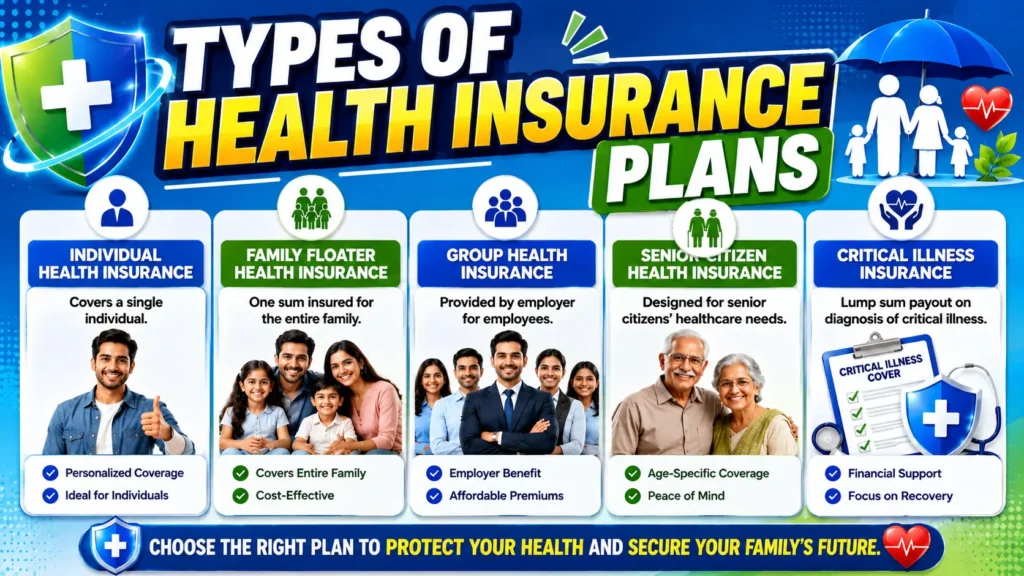
Individual Health Insurance
This plan covers only one person. The premium and sum insured are fixed for that one individual. If you are single or want separate coverage for yourself, individual health insurance is a good starting point.
Family Health Insurance
This is also called a family floater plan. One single sum insured is shared among all family members added in the policy. For example, if you take 10 lakh coverage for a family of four, all four people can use that same 10 lakh amount.
In my opinion, family health insurance is more practical for most Indian households because it usually costs less than buying separate individual policies for every member.
Group Health Insurance
Many companies offer this to their employees as part of the job benefits. It’s good, but the coverage often ends when you leave the job, so relying only on this is risky.
Critical Illness Insurance
This gives a lump sum amount if you are diagnosed with a serious disease like cancer or a heart attack. It’s a good add-on, not a replacement for regular health insurance.
Understanding these types of health insurance helps you pick a plan that actually matches your life situation, instead of just buying whatever the agent suggests.
Why Health Insurance Is Important in 2026
If you think like I do, you will agree that medical costs are rising every single year. In 2026, even a normal hospital stay for 3 to 4 days can cost anywhere between 50,000 to 1.5 lakh rupees, depending on the city and hospital.
Here are honest reasons why health insurance is important right now:
- Hospital bills are increasing faster than most people’s savings.
- One serious illness can wipe out years of savings in days.
- Tax benefits are available under Section 80D on premiums paid.
- Cashless treatment saves you from arranging money during emergencies.
- It protects your family’s financial future, not just your health.
I won’t lie to you, health insurance also has its limits, and I will talk about that honestly too. But overall, the benefits clearly outweigh the small cost of the premium you pay every year.
Health Insurance Benefits You Should Know
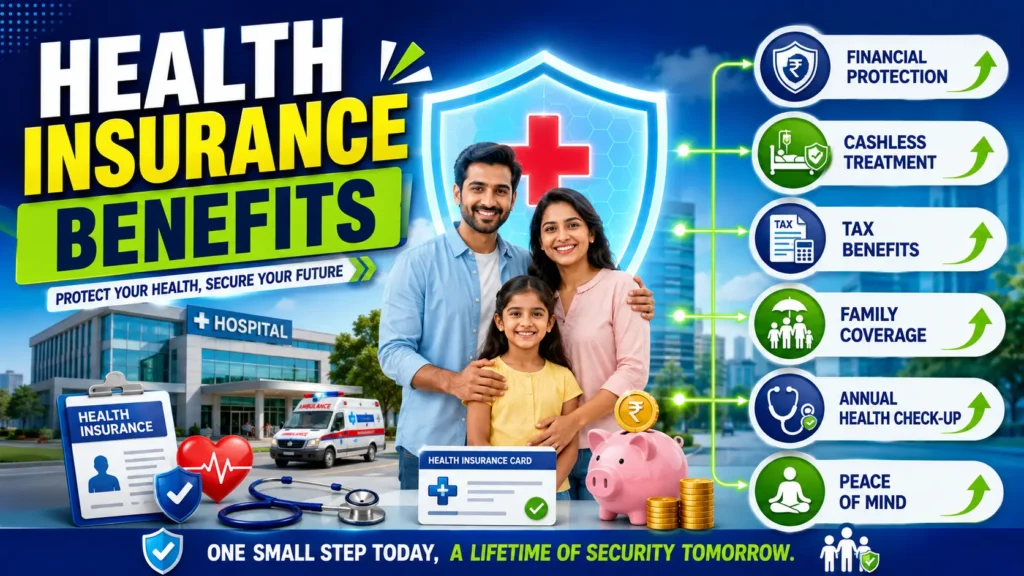
Let’s talk about the real health insurance benefits, without any exaggeration.
The biggest benefit is financial protection. You don’t have to break your fixed deposits or take loans for hospital bills. Second, most policies cover pre and post-hospitalization expenses, which many people don’t realize until they actually claim it.
Third, good health insurance policies also offer free health checkups every year, which honestly, most people ignore, but it’s a nice value addition. Fourth, tax saving under Section 80D is a genuine benefit, especially for salaried people looking to save tax legally.
However, I must be honest here. Not everything is covered. Things like cosmetic surgery and some pre-existing diseases in the first year or two are usually not covered. So don’t expect health insurance to pay for everything; that’s not being realistic.
Cashless Health Insurance Explained
Cashless health insurance is honestly one of the best features in modern policies. Here’s how health insurance works.
When you get admitted to a hospital that is part of your insurance company’s network, you don’t need to pay from your pocket. The hospital directly sends the bill to the insurance company, and they settle it based on your policy terms.
This removes the stress of arranging lakhs of rupees during an emergency, which, tell me the truth, is one of the scariest parts of any hospital visit. Always check the network hospital list before buying a policy, because cashless facility only works in listed hospitals.
How to Choose the Best Health Insurance Policy
Now let’s talk about how to actually choose the best health insurance plan for yourself, because this is where most people get confused.
- Check the sum insured based on your city and family size.
- Check the insurance company’s claim settlement ratio before buying a policy.
- Look for the waiting period on pre-existing diseases.
- Check room rent limits carefully; this is often ignored.
- Read about co-payment clauses before signing anything.
- Compare premiums across at least three to four companies.
In my experience, don’t just buy the cheapest policy. A slightly higher premium with better claim settlement history is always a smarter choice long term.
How to Buy Health Insurance Online
Buying health insurance online in 2026 is actually very simple, and honestly faster than going through an agent.
You can visit the official website or app of the insurance company, compare plans, fill in your basic details, upload documents, and pay the premium online. Most companies also offer instant policy issuance for many plans, meaning you get your policy document within minutes.
Before buying, always compare at least two or three companies on premium, coverage, and network hospitals. Don’t rush just because a website is offering a small discount.
Common Health Insurance Terms Explained
Friends, here are a few common terms that confuse beginners the most.
Premium: The amount you pay to keep your policy active.
Sum Insured: Maximum amount the company pays in a year.
Waiting Period: Time before certain diseases get covered.
Co-payment: A percentage of the bill you pay yourself.
No Claim Bonus: Extra coverage added for not claiming in a year.
Once you understand these terms, reading any policy document becomes much less confusing, trust me.
Health Insurance Mistakes First-Time Buyers Make
Now let’s talk about a few mistakes I have seen people make, and honestly, I made some of these too when I bought my first policy.
The first mistake is buying a policy only because it has the lowest premium. A cheap policy with poor claim settlement history can trouble you exactly when you need help the most. The second mistake is not disclosing existing health conditions properly. This can lead to claim rejection later, which defeats the entire purpose of buying health insurance in the first place.
Another common mistake is ignoring the waiting period clause. Many people assume coverage starts from day one for every disease, but that’s not always true. Pre-existing conditions usually have a waiting period of two to four years, depending on the insurer.
Lastly, many buyers forget to check room rent limits. If your policy has a room rent cap and you choose a higher category room, the company may deduct a proportionate amount from your entire claim, not just the room charges. This single mistake has cost many families a big chunk of their claim amount.
So friends, take your time, read the terms carefully, and don’t rush just to save a few hundred rupees on premium.
Final Thoughts
So friends, that was my honest and simple explanation of what health insurance is and why it matters, especially in 2026. I have tried to keep it real, not just praising insurance blindly, but also telling you where it has limits.
If you don’t have health insurance yet, don’t wait for a medical emergency to realize how important it is—learn from my experience.
Disclaimer
This article is written for general information and educational purposes only. It should not be treated as professional financial or medical advice. Please read the policy document carefully and consult a licensed insurance advisor before making any final decision.
FAQ's
What is health insurance in simple words?
Health insurance is a plan where you pay a small yearly premium, and the company pays your hospital bills when you get sick or injured, protecting your savings.
What does health insurance cover?
It usually covers hospital room charges, doctor fees, medicines, tests, and pre and post hospitalization expenses, though some treatments like cosmetic surgery are often excluded.
What is the difference between individual and family health insurance?
Individual plans cover one person only, while family floater plans share one sum insured among all members, usually costing less overall.
How does cashless health insurance work?
In network hospitals, the insurance company pays the bill directly, so you don’t need to arrange cash during a medical emergency situation.
How much health insurance coverage do I need?
It depends on your city, age, and family size, but experts usually suggest at least 5 to 10 lakh coverage for most families today.
Is health insurance premium tax deductible?
Yes, premium paid for health insurance qualifies for tax deduction under Section 80D, subject to limits based on your age group.